

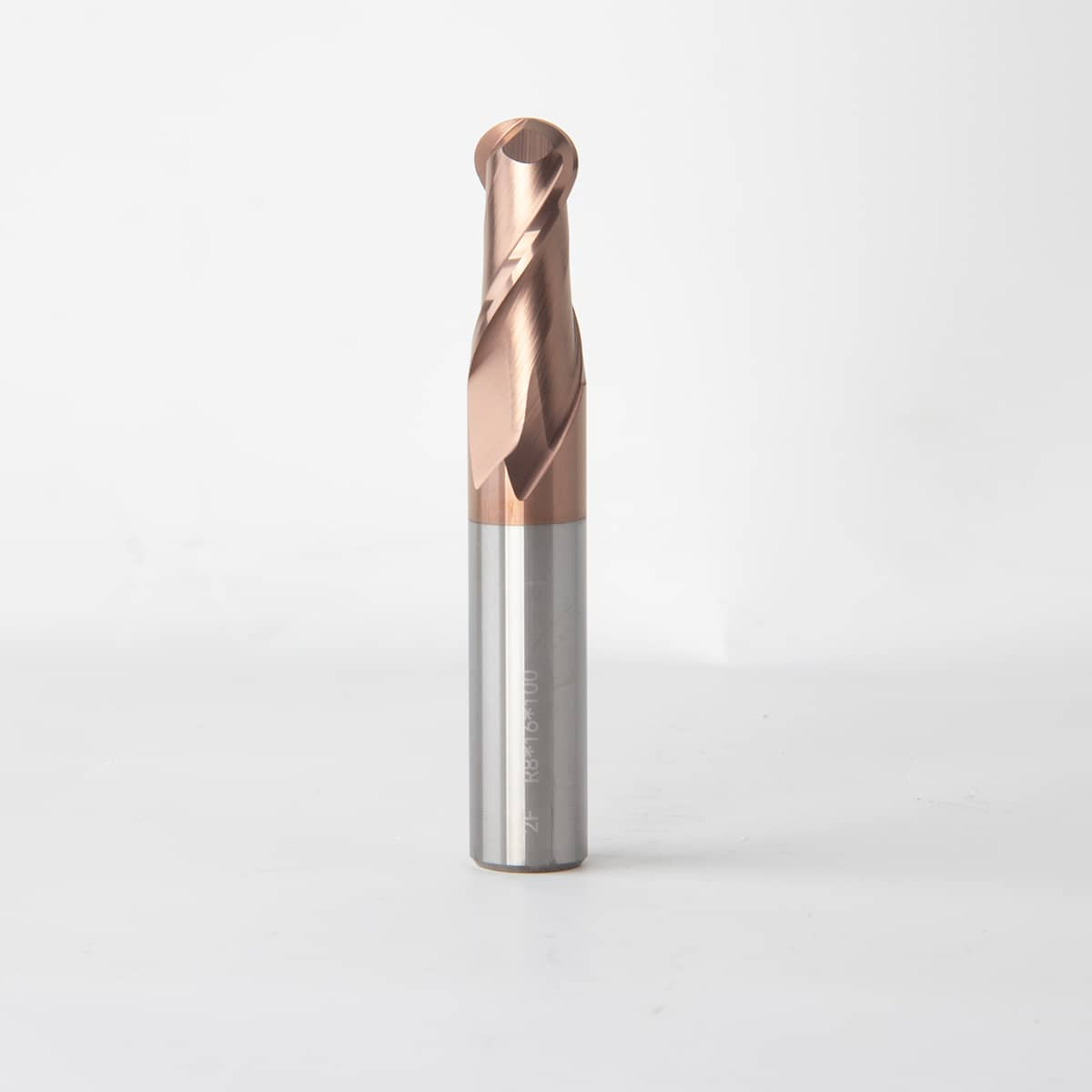
Square – End End MillsSquare – end end mills, also known as flat – end end mills, have a flat cutting end with sharp corners. They are the most versatile type of end mills and are used for a wide range of machining operations, including slotting, pocketing, contouring, and face milling. Square – end end mills can create flat bottom surfaces and sharp internal corners in the workpiece, making them suitable for applications where precise dimensional accuracy and clean edges are required. They come in various sizes and flute configurations, allowing machinists to select the appropriate tool based on the specific machining task and the material being processed.Ball – Nose End MillsBall – nose end mills have a rounded cutting end, resembling a ball. This design makes them ideal for machining curved surfaces, 3D contours, and radiused corners. In industries such as mold – making, aerospace, and automotive, where complex geometries are common, ball – nose end mills are widely used. They can achieve smooth surface finishes on curved parts and are often used in finishing operations to meet the stringent surface quality requirements. Ball – nose end mills are available in different ball diameters and flute counts, providing flexibility in machining various sizes and shapes of curved features.Corner – Radius End MillsCorner – radius end mills combine the features of square – end and ball – nose end mills. They have a flat cutting end with rounded corners, offering a compromise between the ability to create flat surfaces and the capability to machine radiused corners. Corner – radius end mills are useful in applications where a combination of flat and rounded surfaces needs to be machined, such as in the production of dies, molds, and mechanical components with filleted edges. They can reduce the stress concentration at the corners of the workpiece, improving the structural integrity of the part while providing a smoother transition between different surfaces.

T – Slot End MillsT – slot end mills are specialized tools designed for machining T – shaped slots in workpieces. These end mills have a unique cutting geometry that allows them to cut the vertical sides and the bottom of the T – slot in a single operation. T – slots are commonly used in machine tables, fixtures, and mechanical assemblies for the installation of guides, slides, and other components. T – slot end mills come in different sizes to match the standard T – slot dimensions and are essential for creating accurate and properly – sized T – slots in various materials.Dovetail End MillsDovetail end mills are used for machining dovetail – shaped slots and joints, which are widely employed in woodworking, as well as in some metalworking applications where a strong, interlocking connection is required. The distinctive V – shaped cutting edge of dovetail end mills enables them to cut the angled sides of the dovetail profile precisely. They are available in different angles and sizes to accommodate various dovetail designs, ensuring a tight and secure fit when assembling components with dovetail joints.In conclusion, the diverse flute shapes and types of end mills offer a wide range of options for machinists to address different machining challenges. By understanding the characteristics and applications of each flute shape and end – mill type, professionals can make informed decisions, select the most suitable tools, and achieve efficient, high – quality machining results in a variety of manufacturing processes.
Contact us:[email protected]