

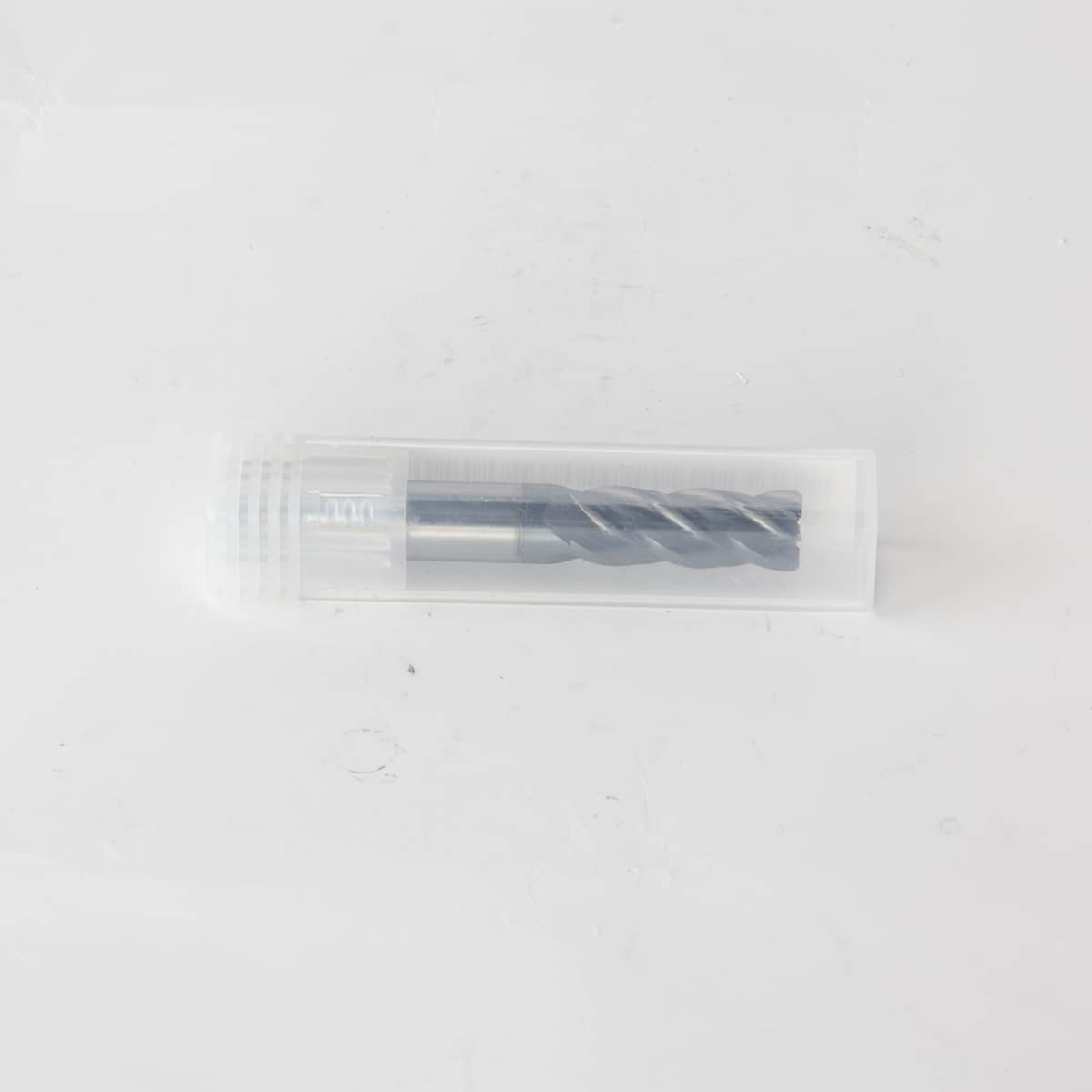
Straight FlutesStraight fluted end mills are one of the most basic and commonly used types. As the name suggests, their flutes run straight along the length of the cutter body. This simple design offers several advantages. Straight flutes are relatively easy to manufacture, which often makes these end mills more cost – effective. They are well – suited for light – duty machining operations, such as shallow slotting, profiling, and finishing cuts on soft materials like aluminum, brass, and plastics. The straight path of the flutes allows for straightforward chip evacuation in these less demanding applications. However, when it comes to machining harder materials or deeper cuts, the straight flute design may have limitations in terms of chip evacuation efficiency and cutting stability.Spiral FlutesSpiral fluted end mills are widely used due to their enhanced performance capabilities. The spiral shape of the flutes provides a smoother cutting action compared to straight flutes. As the cutter rotates, the spiral flutes gradually engage with the workpiece, reducing the impact forces and vibrations during the cutting process. This results in a better surface finish, especially when machining materials that require high – precision and smooth surfaces. Spiral flutes also excel in chip evacuation. The helical path of the flutes helps to lift and carry the chips out of the cutting zone more effectively, preventing chip clogging, which is crucial for deep – hole machining, roughing operations, and machining materials that produce long chips. Depending on the application, end mills can have different helix angles. A lower helix angle (e.g., 30° – 45°) is suitable for general – purpose machining and offers a good balance between cutting force and chip evacuation. Higher helix angles (e.g., 60° – 90°) are often used for machining tough materials or when a very smooth surface finish is required, as they increase the shearing action and reduce the thrust forces on the tool.Variable – Helix FlutesVariable – helix fluted end mills are designed to further optimize cutting performance and reduce vibrations. Unlike traditional spiral flutes with a constant helix angle, variable – helix flutes have a helix angle that changes along the length of the cutter. This unique design disrupts the harmonic frequencies generated during machining, effectively suppressing vibrations and chatter. Variable – helix end mills are ideal for high – speed machining, especially when working with materials that are prone to vibration – induced surface defects, such as thin – walled components or parts with complex geometries. They can maintain a stable cutting process, allowing for higher cutting speeds and feed rates while achieving excellent surface finishes and dimensional accuracy.

Chip – Breaker FlutesChip – breaker flutes are specifically engineered to control chip formation. These flutes feature special geometries, such as notches, ridges, or changes in the flute profile, which break the continuous chips into smaller, more manageable pieces. This is particularly important when machining materials that produce long, stringy chips, as long chips can get tangled around the cutter, cause tool damage, and interfere with the machining process. By breaking the chips, chip – breaker fluted end mills ensure smooth chip evacuation, reduce the risk of tool breakage, and improve the overall efficiency and safety of the machining operation. They are commonly used in roughing operations on materials like steel, where effective chip control is essential.
Contact us:[email protected]