

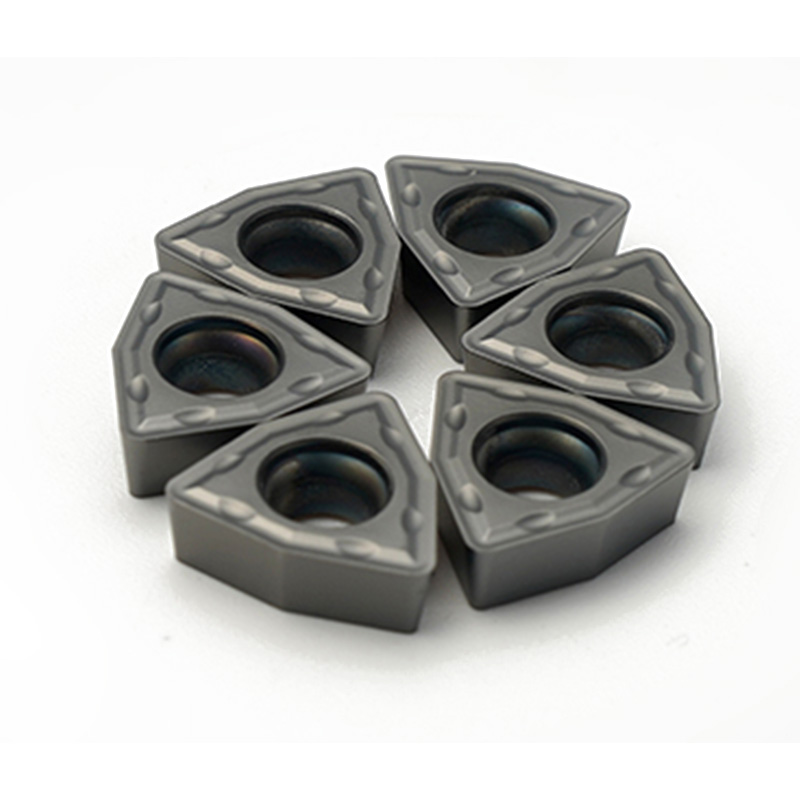
Cemented carbide end mills are highly regarded in machining for their exceptional hardness and wear – resistance, but their cutting performance is also intricately tied to their geometry and design. Every aspect, from the angles of the cutting edges to the shape of the flutes, plays a crucial role in determining how efficiently they remove material, the quality of the machined surface, and their overall durability during operations.Rake Angle InfluenceThe rake angle of a cemented carbide end mill significantly impacts cutting forces and chip formation. A positive rake angle reduces the cutting forces by facilitating easier penetration of the tool into the workpiece. It allows the chips to flow more smoothly off the cutting edge, making it ideal for machining softer materials like aluminum alloys and plastics. This lower force requirement also means less stress on the machine tool, reducing the risk of vibrations and improving the surface finish. Conversely, a negative rake angle provides a stronger cutting edge, capable of withstanding high – stress conditions when machining hard and brittle materials such as hardened steels and cast irons. While it increases the cutting forces, the enhanced edge strength helps prevent chipping and breakage, ensuring reliable performance in tough machining applications.Relief Angle and ClearanceThe relief angle creates the necessary clearance between the cutting edge and the newly – machined surface of the workpiece. An appropriate relief angle prevents the tool from rubbing against the workpiece, which can generate excessive heat, accelerate tool wear, and degrade the surface finish. For cemented carbide end mills, a well – designed relief angle ensures smooth cutting, especially when performing deep cuts or working with materials that produce significant amounts of heat during machining. If the relief angle is too small, the tool may bind, leading to increased cutting forces and potential tool failure. On the other hand, an overly large relief angle can weaken the cutting edge, making it more prone to damage under heavy loads.Cutting Edge ShapeThe shape of the cutting edge, whether it’s straight, rounded, or has a specific profile like a chip – breaker design, affects the cutting performance in various ways. Straight cutting edges are simple and efficient for general – purpose machining, providing clean cuts and good dimensional accuracy. Rounded cutting edges, as seen in ball – nose or corner – radius end mills, are excellent for creating smooth curved surfaces and reducing stress concentrations at corners. They are widely used in finish machining operations where surface quality is paramount. Chip – breaker cutting edges, with their notches or ridges, are engineered to break long chips into smaller, more manageable pieces. This is particularly beneficial when machining materials that produce stringy chips, as it improves chip evacuation, reduces the risk of tool breakage caused by chip entanglement, and enhances the overall efficiency of the machining process.
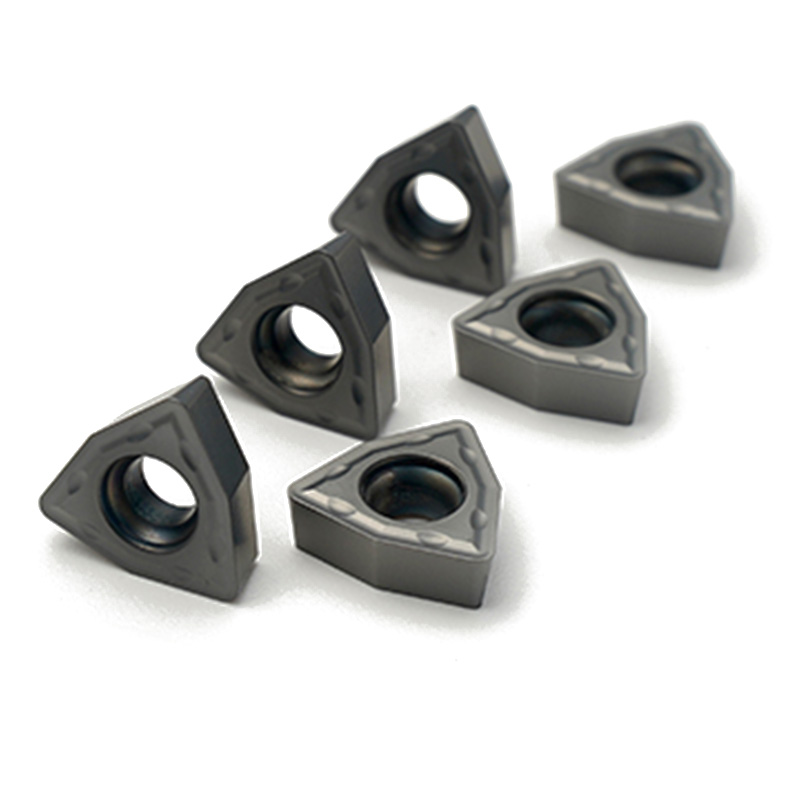
Flute DesignThe flute design of cemented carbide end mills, including the number of flutes, flute shape (straight, spiral, variable – helix), and flute length, has a profound impact on cutting performance. A higher number of flutes generally allows for a higher feed rate and better surface finish as more cutting edges are engaged with the workpiece simultaneously. However, it also reduces the space for chip evacuation, making it less suitable for materials that produce large volumes of chips. Spiral flutes, with their helical shape, offer smoother cutting action and improved chip evacuation compared to straight flutes. They are capable of gradually engaging with the workpiece, reducing impact forces and vibrations, which results in a superior surface finish. Variable – helix flutes take this a step further by disrupting harmonic frequencies, effectively suppressing vibrations and chatter, making them ideal for high – speed machining of complex parts. Additionally, the flute length determines the maximum depth of cut the end mill can handle. A longer flute length enables deeper cuts but may also increase the risk of tool deflection if not properly supported, while a shorter flute length provides better rigidity for shallow cuts and fine – detail machining.Diameter and Length ProportionsThe diameter and length of the cemented carbide end mill also influence its cutting performance. A larger – diameter end mill can remove more material in a single pass, increasing machining efficiency for operations like face milling or roughing. However, it requires more power from the machine tool and may be more prone to vibrations if not properly balanced. The length – to – diameter ratio is equally important. An end mill with an excessive length relative to its diameter can suffer from reduced rigidity, leading to tool deflection and inaccuracies in the machined part. Properly proportioned diameter and length ensure that the end mill can withstand the cutting forces, maintain stability during machining, and deliver consistent performance.In conclusion, the geometry and design of cemented carbide end mills are finely – tuned elements that work in harmony to determine their cutting performance. Machinists must carefully consider these factors based on the specific material being machined, the machining operation, and the desired results. By understanding how each aspect of the end mill’s geometry and design impacts cutting performance, professionals can select the most appropriate tools, optimize machining parameters, and achieve efficient, high – quality machining outcomes.
Contact us:[email protected]