

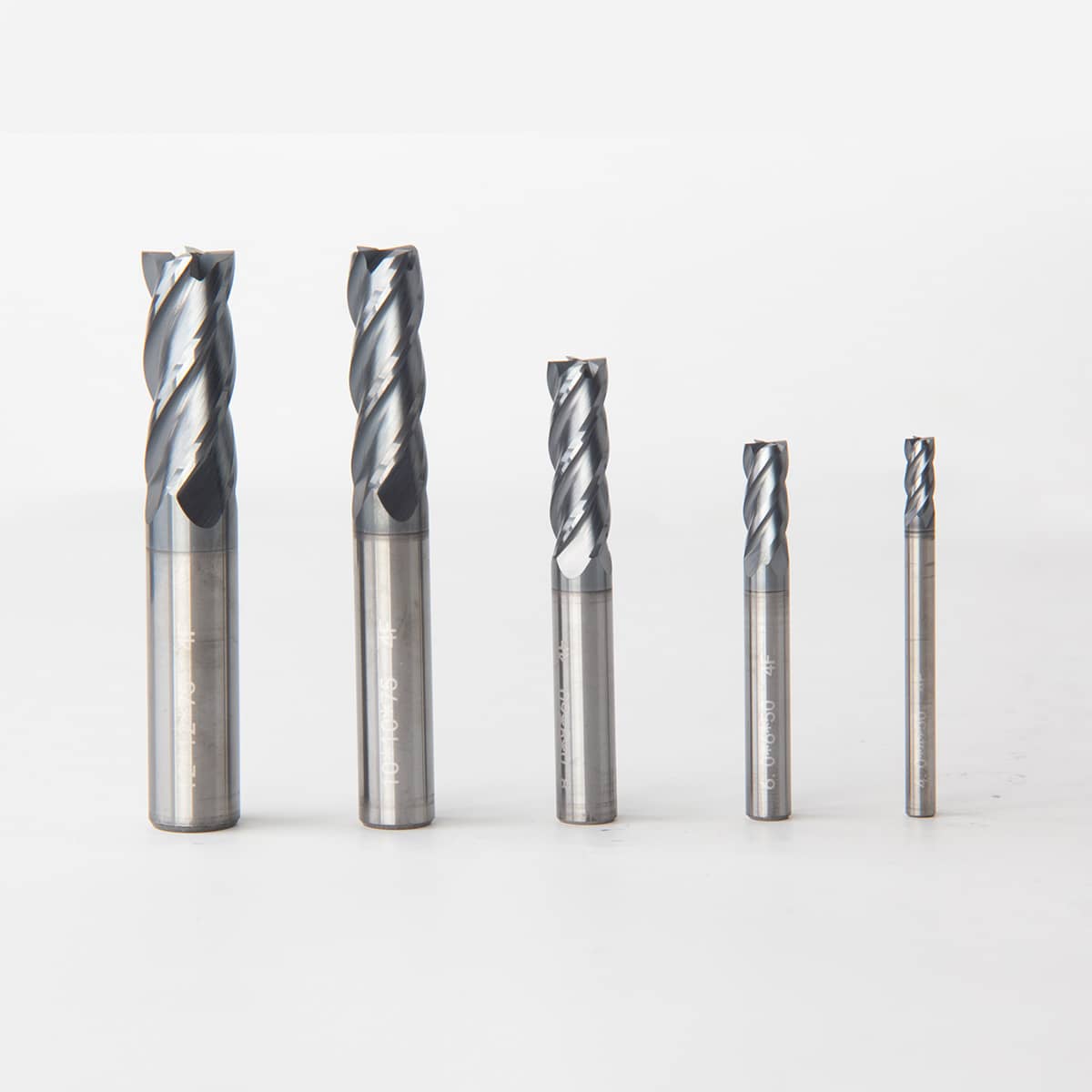
5-axis machining is revolutionizing the manufacturing industry by enabling the production of highly complex parts with exceptional precision. The role of the right cutting tools, especially end mills, cannot be overstated when it comes to optimizing performance. In this blog, we’ll explore how end mills are used in 5-axis machining, their challenges, and how to select the right end mill for your needs.
1. Introduction to 5-Axis Machining and End Mills
5-axis machining refers to the process where a machine tool operates on five different axes simultaneously, offering far greater flexibility than traditional 3-axis machining. It allows for the creation of intricate, highly detailed components that would be impossible to achieve with standard machines.
End mills are the go-to cutting tools for a wide range of machining operations. In 5-axis machining, they are essential for achieving precise cuts, intricate shapes, and improved surface finishes. By moving the tool in multiple directions, end mills enable the creation of parts with complex geometries—ideal for industries like aerospace, automotive, and medical devices.
2. What is 5-Axis Machining?
5-axis machining involves simultaneous movement of a tool along five axes: three linear axes (X, Y, and Z) and two rotational axes (A and B). This allows the tool to approach the workpiece from virtually any direction. The main advantages of 5-axis machining over traditional methods include:
- Higher Precision: The ability to cut complex angles and geometries in one setup.
- Reduced Setup Time: Multi-directional cutting minimizes the need for repositioning the part.
- Increased Efficiency: More operations can be performed in a single pass, reducing cycle time.
3. Applications of End Mills in 5-Axis Machining
End mills are versatile tools that can handle a variety of tasks in 5-axis machining. Some of the key applications include:
- Complex Geometries: 5-axis machining allows end mills to access different angles of a part, enabling the creation of intricate designs such as contoured surfaces, undercuts, and deep cavities. This is particularly beneficial for industries that require parts with complex geometries, like aerospace components and medical devices.
- Precision Cutting: End mills provide the accuracy needed to produce parts with high surface finish standards. The continuous movement of the tool in five axes ensures the cutting is smooth, resulting in superior surface finishes compared to traditional machining methods.
- Multi-Angle Cutting: One of the standout features of 5-axis machining is the ability to machine parts from multiple angles without repositioning the part. End mills, when used in conjunction with this capability, allow for efficient multi-angle cutting, reducing the time spent on setup and increasing overall productivity.
- Reducing Machining Errors: End mills in 5-axis machining help minimize errors by ensuring that the cutting tool maintains consistent contact with the workpiece. This reduces inaccuracies that may arise from retooling or repositioning parts.
4. Challenges of Using End Mills in 5-Axis Machining
While 5-axis machining offers many advantages, it comes with a few challenges when using end mills:
- Tool Selection and Parameters: Choosing the right end mill for a specific task is critical. You must consider factors like material type, part geometry, and desired surface finish. Inadequate tool selection can lead to issues such as poor surface quality, increased wear, and reduced tool life.
- Vibration and Heat Build-Up: Due to the complexity of movements in 5-axis machining, vibrations and heat generation can become problematic. These issues may affect the accuracy of the machining process and increase tool wear. Proper machine calibration and cooling systems are essential to overcome these challenges.
- Tool Wear and Surface Finish Control: In 5-axis machining, the end mill constantly changes its angle, which can cause uneven wear and affect the surface finish. Continuous monitoring of the tool’s condition and regular maintenance are crucial to ensure consistent quality throughout the machining process.
5. How to Select the Right End Mill for 5-Axis Machining
Selecting the right end mill is crucial for achieving the desired machining results. Here’s what you need to consider:
- Material Type: The material of the workpiece greatly impacts the choice of the end mill. For softer materials, high-speed steel (HSS) end mills may be sufficient. For harder materials like titanium or stainless steel, carbide or coated carbide end mills are preferred due to their superior hardness and wear resistance.
- Part Shape and Size: The complexity of the part will determine the type of end mill you need. Ball nose end mills are ideal for curved surfaces and fine detailing, while flat end mills are better for precision machining of flat surfaces.
- Cutting Parameters: Selecting the right cutting parameters, including cutting speed, feed rate, and depth of cut, is essential to prevent tool damage and achieve the best results. Always adjust these parameters based on the material you’re working with and the complexity of the cut.
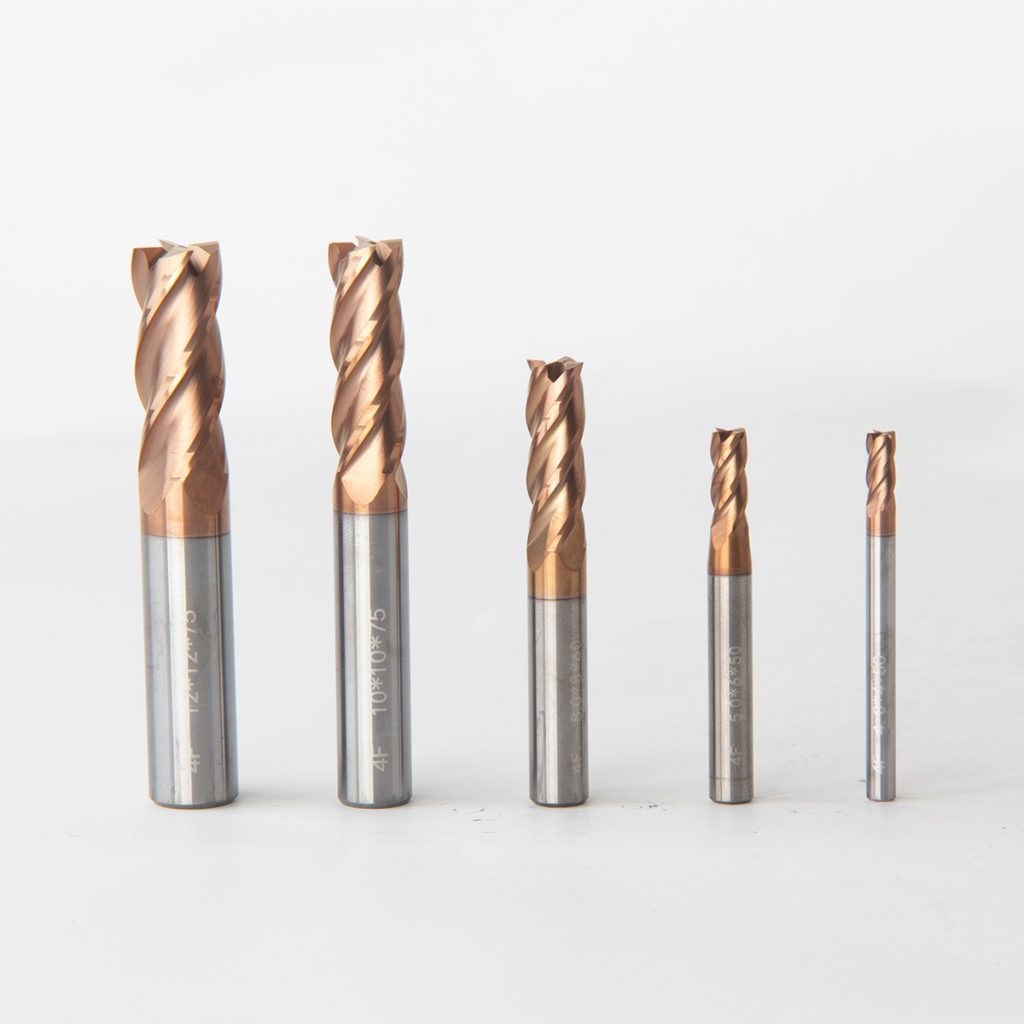
- Coatings and Tool Material: Coatings like TiN (Titanium Nitride) or TiAlN (Titanium Aluminum Nitride) can enhance the performance of the end mill, providing better heat resistance and extending tool life. Choosing the right coating can significantly reduce wear and improve overall machining efficiency.
- Machine Compatibility: Ensure that the end mill you choose is compatible with your 5-axis machine. Some machines may require specific end mills that can handle high-speed rotations or are capable of performing specific tasks like high-feed cutting.
6. Optimizing and Maintaining End Mills
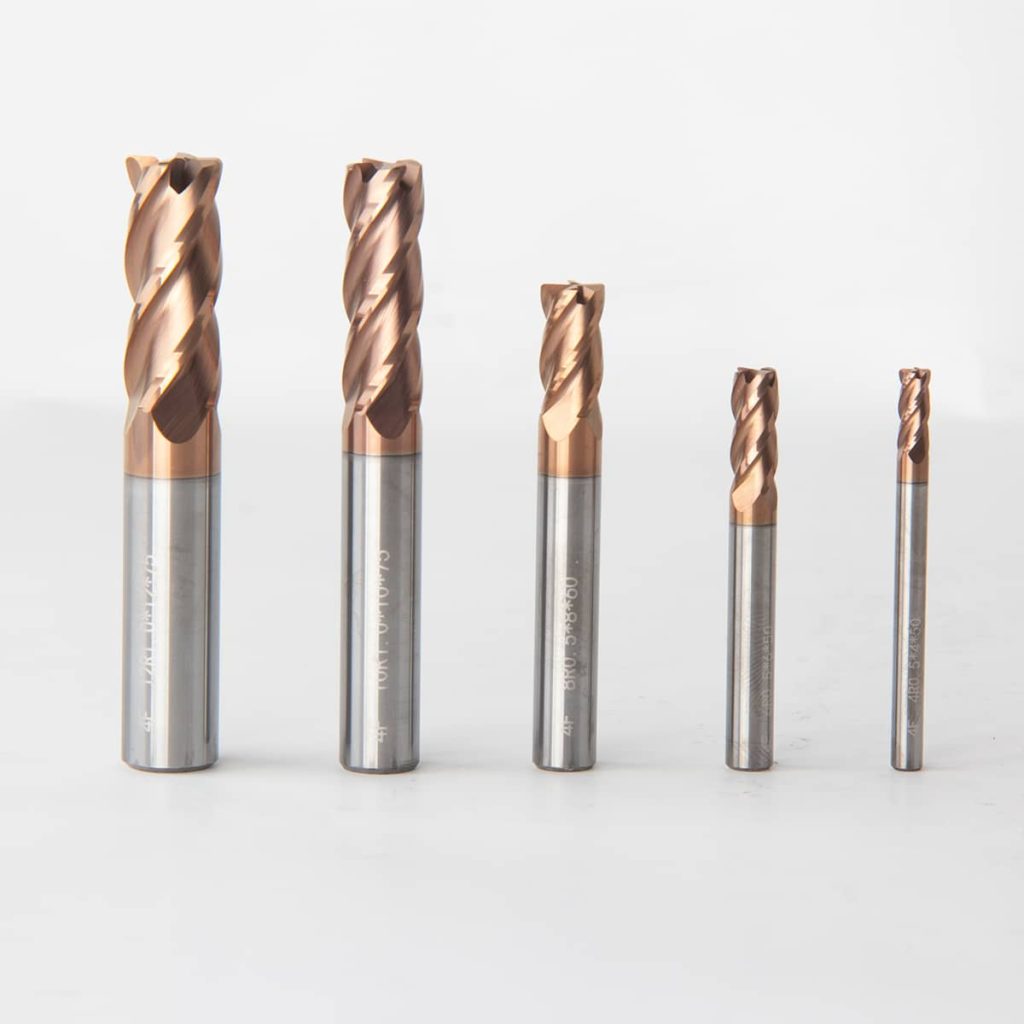
To get the most out of your end mills, it’s important to optimize them for 5-axis machining:
- Tool Optimization: Adjust cutting parameters based on the material and the complexity of the part to optimize tool performance.
- Regular Maintenance: Routine inspection and maintenance will help detect wear and prevent downtime.
- Use of Tool Monitoring Systems: Many modern 5-axis machines have integrated systems that monitor tool wear and can automatically adjust parameters to optimize performance.
7. Conclusion
End mills play a vital role in 5-axis machining, enabling manufacturers to produce complex and highly precise components. By understanding their applications, challenges, and the factors to consider when selecting them, you can make informed decisions to optimize your machining processes. As 5-axis machining technology continues to evolve, end mills will remain a key tool for industries seeking efficiency and precision in manufacturing.
Contact us: [email protected]