

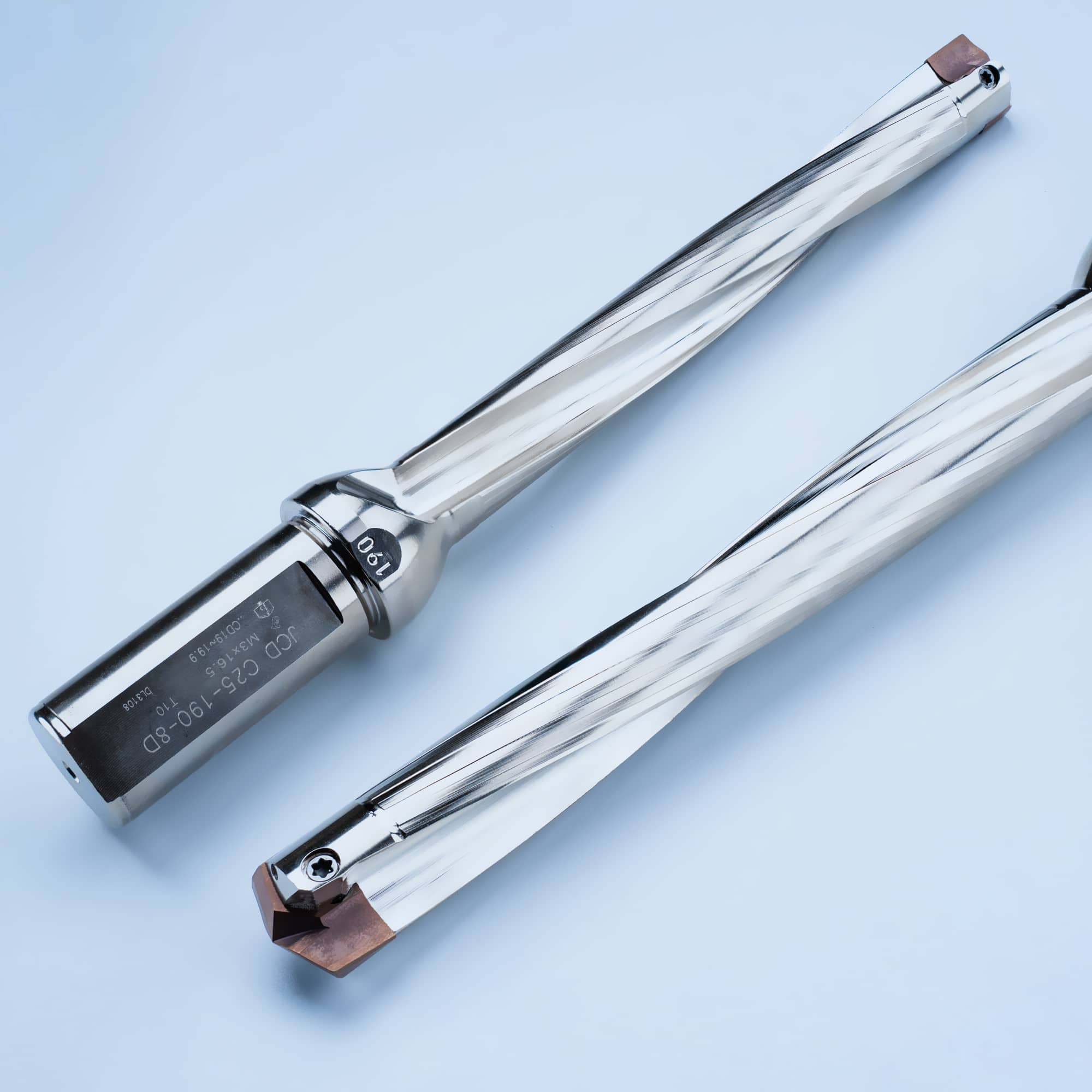
In the field of machining, U drills and their matching blades have become indispensable tools due to their unique design and excellent performance. Understanding what they are and how they work can help machinists make the most of these tools in various manufacturing processes.U drills, also known as gun drills for deep – hole applications in some cases, are specialized drilling tools with a distinct U – shaped cross – section. This unique shape is not just for aesthetics; it serves several crucial functions. The U – shaped flute design provides a larger and more efficient channel for chip evacuation compared to traditional drills. When drilling, especially in deep – hole operations, chips need to be quickly removed from the cutting zone to prevent clogging, which can lead to tool breakage and poor hole quality. The U – shaped flutes of U drills allow chips to flow out smoothly, ensuring a continuous and reliable drilling process.Another key feature of U drills is their internal coolant channel. This channel runs through the center of the drill, directing coolant precisely to the cutting edge. The coolant plays a vital role in reducing heat generated during the drilling process. High temperatures can cause tool wear, affect the dimensional accuracy of the hole, and even damage the workpiece. By effectively dissipating heat, the internal coolant system of U drills extends the tool life and improves the quality of the drilled holes.U drills are typically made from high – quality materials such as carbide or high – speed steel (HSS), depending on the application requirements. Carbide U drills are preferred for machining hard materials like stainless steel, titanium, and hardened alloys due to their high hardness and wear resistance. HSS U drills, on the other hand, are more suitable for softer materials and general – purpose drilling tasks, offering a good balance between cost – effectiveness and performance.Now, let’s turn to the matching blades of U drills. These blades are the cutting elements that directly interact with the workpiece. They are usually replaceable inserts, which is a significant advantage as it reduces the overall cost of the tool. When the cutting edge of the blade wears out, instead of replacing the entire drill, only the blade needs to be changed. This not only saves time but also minimizes material waste.

U drill blades come in various geometries and materials to suit different machining needs. The blade geometry, including the rake angle, relief angle, and cutting edge shape, is carefully designed to optimize cutting performance. For example, a positive rake angle blade reduces cutting forces and is suitable for machining softer materials, while a negative rake angle blade provides stronger cutting edges, ideal for harder materials.In terms of materials, similar to U drills, carbide is a popular choice for blades due to its excellent cutting performance and durability. Some advanced U drill blades also feature specialized coatings, such as TiN (Titanium Nitride), TiAlN (Titanium Aluminum Nitride), or DLC (Diamond – Like Carbon). These coatings enhance the blade’s wear resistance, reduce friction, and improve heat dissipation, further extending the tool life and improving the quality of the drilled holes.U drills and their matching blades are widely used in a variety of industries. In the automotive industry, they are used to drill deep holes in engine blocks for coolant passages and oil galleries. In the aerospace industry, where high – precision and reliable drilling of hard alloys are required, U drills and their blades play a crucial role in manufacturing components such as landing gear parts and wing structures. They are also commonly used in the production of hydraulic components, mold – making, and general mechanical engineering. https://wencerl.preview.gotlink.cn/product-category/u-drill/%E2%80%8BIn conclusion, U drills and their matching blades are highly specialized and efficient machining tools. Their unique design features, diverse material options, and wide range of applications make them essential for modern manufacturing. Whether it’s deep – hole drilling, machining hard materials, or achieving high – precision results, understanding and using U drills and their blades correctly can significantly enhance the productivity and quality of machining operations.