

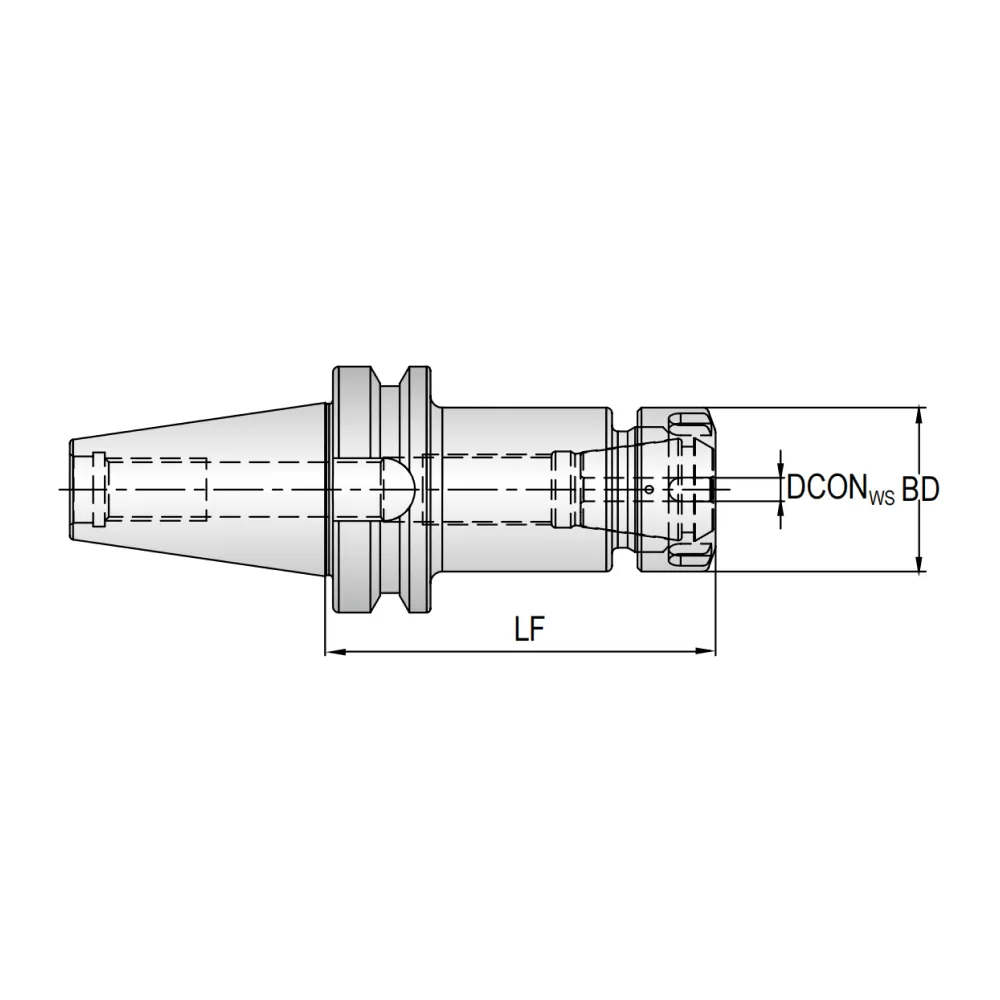
In the realm of high – end machining, where precision, efficiency, and quality are non – negotiable, tool holders play a pivotal and multi – faceted role. These unassuming yet essential components are the linchpin that connects the cutting tool to the machine tool, influencing every aspect of the machining process from the accuracy of the finished part to the overall productivity of the operation.Ensuring Ultra – High PrecisionPrecision is the cornerstone of high – end machining, and tool holders are crucial in achieving it. High – end tool holders are engineered with meticulous precision, featuring advanced manufacturing techniques and tight – tolerance designs. They provide a secure and accurate mounting point for cutting tools, minimizing runout, which is the deviation of the tool’s axis of rotation from its ideal position. Even the slightest amount of runout can cause significant inaccuracies in the machined part, especially when working with tight tolerances required in industries like aerospace, medical device manufacturing, and precision mold – making. By reducing runout to a minimum, tool holders ensure that the cutting tool follows the programmed path with utmost accuracy, enabling the production of components with micron – level precision. Additionally, many high – end tool holders are designed with features such as hydrostatic or shrink – fit technology. Hydrostatic tool holders use a thin film of pressurized oil to create a precise and stable connection between the holder and the tool, while shrink – fit holders rely on thermal expansion and contraction to achieve an extremely tight fit. Both technologies contribute to enhancing the overall precision of the machining process.Enhancing Dynamic StabilityEfficiency is a key factor in high – end machining, and tool holders contribute significantly to reducing downtime through rapid tool changes. Many high – end machining centers are equipped with automatic tool – changing systems that rely on precise and reliable tool holders. Quick – change tool holder systems allow for the rapid and seamless exchange of cutting tools, minimizing the time the machine is idle during tool changes. This is especially critical in complex machining operations that require the use of multiple tools to complete a single part. By reducing tool – change times, manufacturers can increase the overall productivity of their high – end machining processes, enabling them to meet tight production schedules and deliver high – quality products in a timely manner. Moreover, advanced tool identification and monitoring systems integrated with tool holders can track tool usage, remaining life, and performance data, further optimizing the tool – changing process and ensuring that the right tool is used at the right time.Protecting Cutting Tools and Machine ToolsIn high – end machining, where cutting tools and machine tools represent significant investments, tool holders act as protectors. A well – designed tool holder distributes the cutting forces evenly across the tool and the holder interface, preventing localized stress concentrations that could lead to tool breakage or damage to the machine tool spindle. By providing a secure and stable connection, tool holders also reduce the risk of tool slippage during machining, which can cause severe damage to both the tool and the workpiece. Additionally, some high – end tool holders are designed with features such as coolant – through capabilities. These holders allow coolant to be directed precisely to the cutting edge, reducing heat generation, improving chip evacuation, and protecting the cutting tool from excessive wear. This not only extends the life of the cutting tool but also helps to maintain the accuracy and performance of the machine tool over time.

Facilitating Versatility and AdaptabilityHigh – end machining often involves working with a wide variety of materials, complex geometries, and diverse machining operations. Tool holders offer the versatility and adaptability required to meet these challenges. They come in various types, sizes, and configurations to accommodate different cutting tools, such as end mills, drills, reamers, and taps. Specialized tool holders can be used for specific applications, such as high – speed machining, micro – machining, or five – axis machining. This flexibility allows manufacturers to use a single machine tool for multiple tasks, reducing the need for dedicated equipment and increasing the overall utilization of their machining resources. Furthermore, the ability to quickly and easily change tool holders enables manufacturers to adapt to changing production requirements and product designs, enhancing their competitiveness in the high – end machining market.In conclusion, tool holders are integral to high – end machining, playing a critical role in ensuring precision, enhancing stability, enabling efficient tool changes, protecting equipment, and facilitating versatility. As high – end machining technologies continue to advance, the importance of tool holders in driving innovation and achieving superior machining results will only grow. Manufacturers in industries that rely on high – end machining must recognize the value of investing in high – quality tool holders and understanding their role in optimizing the machining process to stay ahead in a highly competitive global market.