

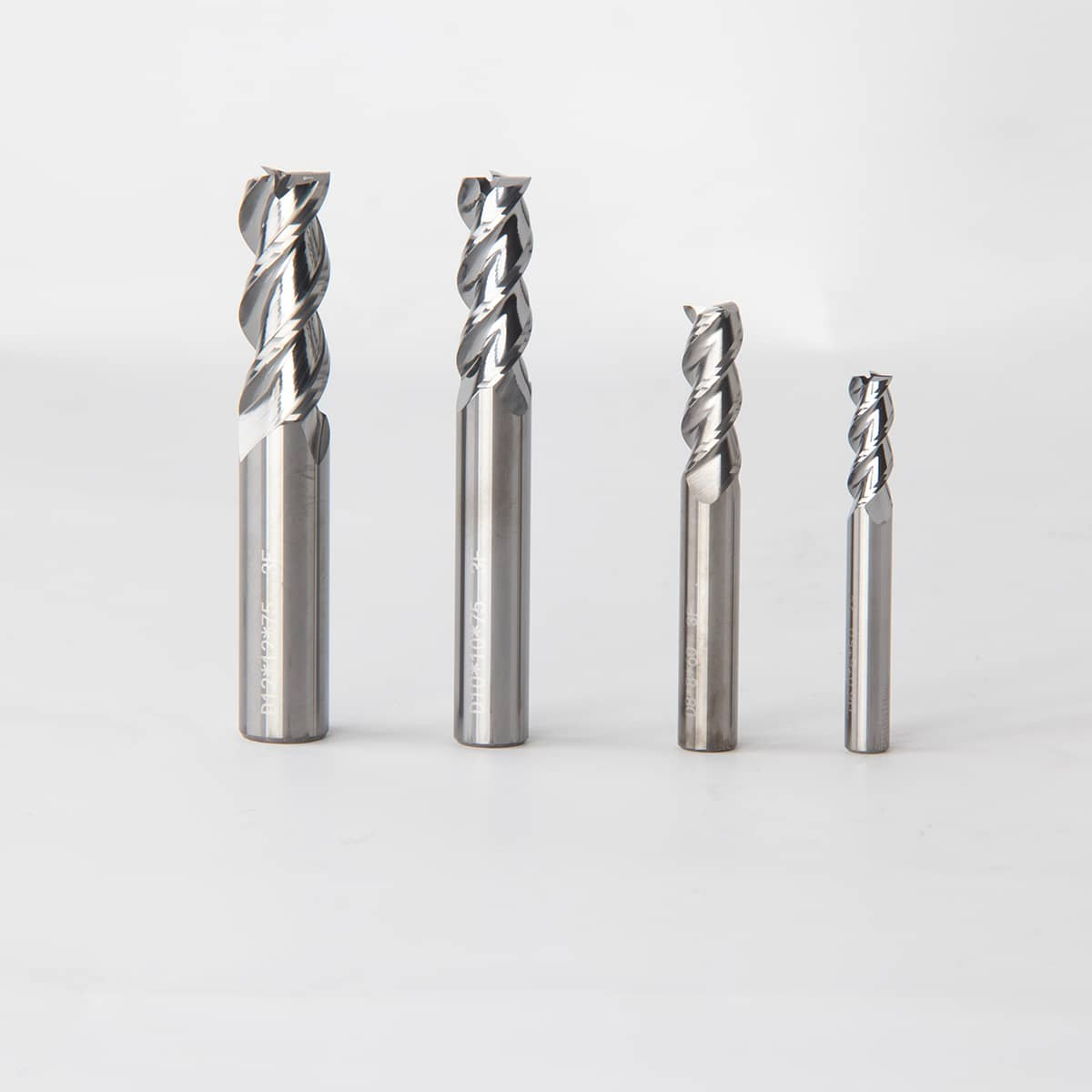
The trend toward smaller milling cutters in modern machining reflects advancements in precision engineering, material science, and manufacturing efficiency. As industries demand higher accuracy, faster production speeds, and reduced material waste, tool designers have responded by developing compact yet high-performance cutting tools. Here’s why smaller milling cutters are becoming increasingly popular and how they benefit modern machining processes.
1. Demand for Higher Precision and Finer Details
Modern industries, especially aerospace, medical device manufacturing, and electronics, require extremely tight tolerances and intricate part geometries. Smaller milling cutters allow for finer detailing, sharper corners, and smoother surface finishes in micro-machining applications. Their reduced size enables access to confined spaces that larger tools cannot reach, making them essential for complex components like turbine blades, implants, and micro-molds.

2. Improved Tool Rigidity and Vibration Control
Smaller cutters often exhibit better rigidity due to their shorter flute lengths and optimized geometries. This reduces tool deflection and chatter, leading to more stable cutting conditions and improved surface quality. Advanced tool materials like ultra-fine carbide grades and diamond coatings further enhance their durability, allowing small-diameter tools to maintain performance even at high spindle speeds.
3. Compatibility with High-Speed Machining (HSM) and CNC Advancements
High-speed machining relies on small-diameter tools running at elevated RPMs to achieve efficient material removal with minimal heat generation. Modern CNC machines, equipped with high-frequency spindles and precise motion control, are optimized for smaller cutters, enabling faster feed rates and shorter cycle times. Additionally, trochoidal milling and other adaptive toolpaths maximize the efficiency of small tools, reducing wear and extending tool life.
4. Material Savings and Reduced Machining Forces
Smaller cutters remove less material per pass, which minimizes cutting forces and lowers energy consumption. This is particularly beneficial when working with expensive or difficult-to-machine materials like titanium, Inconel, or hardened steels. Reduced tool pressure also decreases the risk of workpiece distortion, making small cutters ideal for thin-walled or delicate components.
5. Growth in Micro-Manufacturing and Miniaturized Products
The rise of microelectronics, microfluidics, and precision optics has driven the need for ultra-small milling tools. Diameters below 1mm are now common in PCB milling, watchmaking, and medical device production. Innovations like micro-grain carbide and hybrid ceramic tools push the limits of how small cutters can go while maintaining cutting performance.

Challenges and Considerations
Despite their advantages, smaller milling cutters require careful handling. They are more prone to breakage if subjected to excessive loads or improper feeds and speeds. Machine rigidity, tool holding accuracy (such as hydraulic or shrink-fit chucks), and precise coolant delivery become critical factors in ensuring success. Additionally, smaller tools may require more frequent tool changes in heavy roughing applications, where larger cutters still dominate.
Future Trends in Milling Cutter Design
As additive manufacturing and hybrid machining techniques evolve, we may see even smaller and more specialized milling tools. Coatings like nano-composites and self-lubricating materials could further enhance tool life, while AI-driven machining optimization will help maximize the potential of miniature cutters.
Conclusion
The shift toward smaller milling cutters is driven by the need for precision, efficiency, and adaptability in modern manufacturing. While they may not replace larger tools in all applications, their ability to handle intricate geometries and high-speed operations makes them indispensable in advanced machining. By understanding their strengths and limitations, manufacturers can leverage small-diameter cutters to achieve superior results in an increasingly miniaturized industrial landscape.
Contact us:[email protected]