

Fundamental Geometry Differences
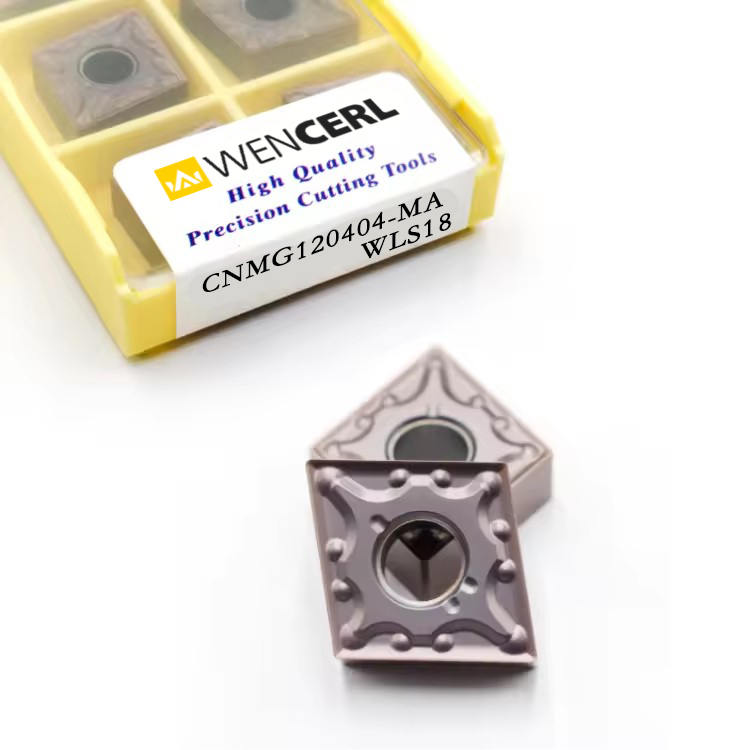
Positive rake inserts feature cutting edges angled toward the material with sharper wedge angles (typically 45-65°), creating lower cutting forces but reduced edge strength. Negative rake inserts present a more robust 90° edge configuration with dual-sided usability, sacrificing some cutting efficiency for dramatically improved tool life in heavy-duty applications. The choice between these geometries fundamentally impacts chip control, power consumption, and machining stability across various operational scenarios.
Positive Rake Insert Applications
Ideal for precision finishing (achieving Ra<0.4μm surface finishes) and thin-walled component machining where minimal deflection is critical. These inserts excel in low-power machines (like benchtop lathes) and when processing soft, gummy materials (aluminum, copper, plastics) where built-up edge prevention is paramount. The reduced cutting forces enable higher speeds (up to 300m/min in aluminum) and are mandatory for intricate profile turning of complex aerospace components. Positive geometry proves indispensable when machining heat-sensitive materials (magnesium alloys) where heat must be carried away with the chip rather than conducted into the workpiece.

Negative Rake Insert Advantages
The workhorse choice for interrupted cuts (forging scale removal, cast surface machining) and heavy roughing operations where edge integrity outweighs surface finish requirements. Their double-sided design provides 8 usable edges versus positive inserts’ 2-4 edges, delivering superior cost-per-edge economics in high-volume production. Negative rake dominates hard turning applications (HRC45-65) where extreme compressive stresses demand the insert’s 90° corner strength. These inserts maintain stability in unstable setups (long overhangs, worn machine ways) and are preferred for high-feed turning (fn>0.5mm/rev) of tough alloys like Inconel and titanium.
Material-Specific Performance Characteristics
Positive rake geometries reduce cutting temperatures by 15-20% in thermal-conductive materials (copper, aluminum), while negative rake configurations better withstand the abrasive wear encountered when machining high-silicon aluminum or glass-filled composites. Steel machining presents a crossover point – positive inserts for finishing (Ra<0.8μm), negative for roughing. Superalloys generally require negative rake’s thermal resistance, though advanced PVD-coated positive inserts are gaining traction in aerospace finishing applications.

Economic Considerations
While negative rake inserts offer longer tool life, positive rake geometries often achieve better overall cost efficiency in finishing operations through reduced power consumption (up to 40% savings) and higher quality surfaces that eliminate secondary operations. The break-even point typically occurs at batch sizes above 500 parts where negative rake’s edge count advantage outweighs positive rake’s energy savings.
Emerging Hybrid Solutions
Modern tooling systems now offer “semi-positive” geometries that combine 85° approach angles with specialized edge preparations, bridging the gap between these traditional options. Laser-treated negative rake edges can now achieve surface finishes rivaling positive tools, while nano-grained positive rake substrates approach negative rake durability in certain applications. These advancements continue to blur the historical distinctions while expanding machining possibilities across all material groups.
The optimal insert selection ultimately depends on a matrix of material properties, machine capabilities, finish requirements, and production volumes. Successful shops maintain both geometries in their tool cribs, applying each where its inherent advantages deliver maximum operational and economic benefits.
Contact us:[email protected]