

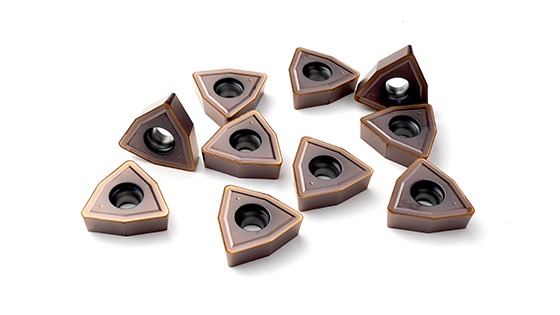
In the field of CNC machining, the selection of cemented carbide blade materials is a critical decision that directly impacts machining efficiency, tool life, and the quality of the finished product. With a variety of cemented carbide materials available, each with distinct properties, understanding how to choose the most suitable one is essential for optimal machining performance.Workpiece Material ConsiderationThe material of the workpiece is the primary factor influencing the choice of cemented carbide blade material. For machining soft and ductile materials like aluminum alloys, brass, or plastics, cemented carbide with a fine – grain structure is often preferred. Fine – grain cemented carbide offers enhanced edge sharpness, allowing for smooth chip formation and reduced burrs, which are crucial for achieving a good surface finish on these materials. When dealing with hard and abrasive materials such as hardened steels, cast irons, or nickel – based superalloys, a coarser – grain or ultra – fine – grain cemented carbide with higher cobalt content may be more suitable. The increased cobalt content improves the toughness of the carbide, reducing the risk of edge chipping and breakage when facing high – stress cutting conditions. Additionally, for titanium alloys, which have poor thermal conductivity and tend to cause high – temperature build – up during machining, cemented carbide with specific additives to enhance heat resistance and reduce adhesion is advisable.Machining Operations and ConditionsThe type of machining operation and the associated conditions also play a significant role. In roughing operations, where the goal is to remove a large amount of material quickly, cemented carbide blades with higher toughness are needed to withstand the high cutting forces. Blades with a relatively higher cobalt content can better endure the impact and stress during roughing. For finishing operations, where achieving a precise surface finish and tight tolerances is crucial, cemented carbide with excellent wear resistance and edge stability is preferred. Ultra – fine – grain carbide, for example, can maintain a sharp edge for longer, ensuring consistent and accurate machining. Moreover, cutting speed, feed rate, and depth of cut affect the material selection. High – speed machining requires cemented carbide with good thermal stability to prevent excessive tool wear due to heat generation. In high – feed – rate operations, blades with strong edge strength are necessary to avoid premature failure.Coating CompatibilityCoatings can significantly enhance the performance of cemented carbide blades, and the choice of blade material should consider coating compatibility. Different coating materials, such as TiN (Titanium Nitride), TiAlN (Titanium Aluminum Nitride), or DLC (Diamond – Like Carbon), have specific adhesion requirements and performance benefits. For instance, if a high – temperature – resistant coating like TiAlN is planned to be applied to improve the blade’s performance in high – speed machining of heat – resistant alloys, the base cemented carbide material should have a suitable surface finish and chemical composition to ensure strong coating adhesion. Some cemented carbide materials are specifically formulated to work optimally with certain coatings, providing enhanced wear resistance and cutting performance when combined.Tool Life and Cost – Benefit AnalysisBalancing tool life and cost is an important aspect of material selection. While high – performance cemented carbide materials with advanced compositions and microstructures can offer extended tool life, they often come with a higher price tag. In high – volume production, where tool replacement time and consistency are critical, investing in more expensive but longer – lasting cemented carbide blades may be cost – effective in the long run as it reduces downtime and improves overall productivity. However, for small – scale production or less – demanding machining tasks, more cost – effective cemented carbide materials can be chosen without sacrificing too much on performance. It’s essential to calculate the cost per part, considering factors like tool purchase cost, machining time, and the number of parts that can be produced with a single blade, to make an informed decision.Specialized Requirements and Industry StandardsIn some industries, there are specialized requirements and standards that dictate the choice of cemented carbide blade materials. For example, in the aerospace industry, where components need to meet strict quality and safety standards, cemented carbide materials with specific certifications and traceability may be required. In the medical device manufacturing industry, where biocompatibility and precision are of utmost importance, certain types of cemented carbide that are less likely to cause corrosion or release harmful substances may be preferred. Staying updated with industry – specific regulations and best practices helps in selecting the right cemented carbide material that complies with all the necessary requirements.In conclusion, choosing the most suitable cemented carbide CNC blade material requires a comprehensive evaluation of the workpiece material, machining operations, coating compatibility, tool life, cost – benefit factors, and industry – specific requirements. By carefully considering these aspects, machinists and manufacturers can make informed decisions that optimize machining performance, reduce costs, and ensure the production of high – quality components.
Contact us:[email protected]