

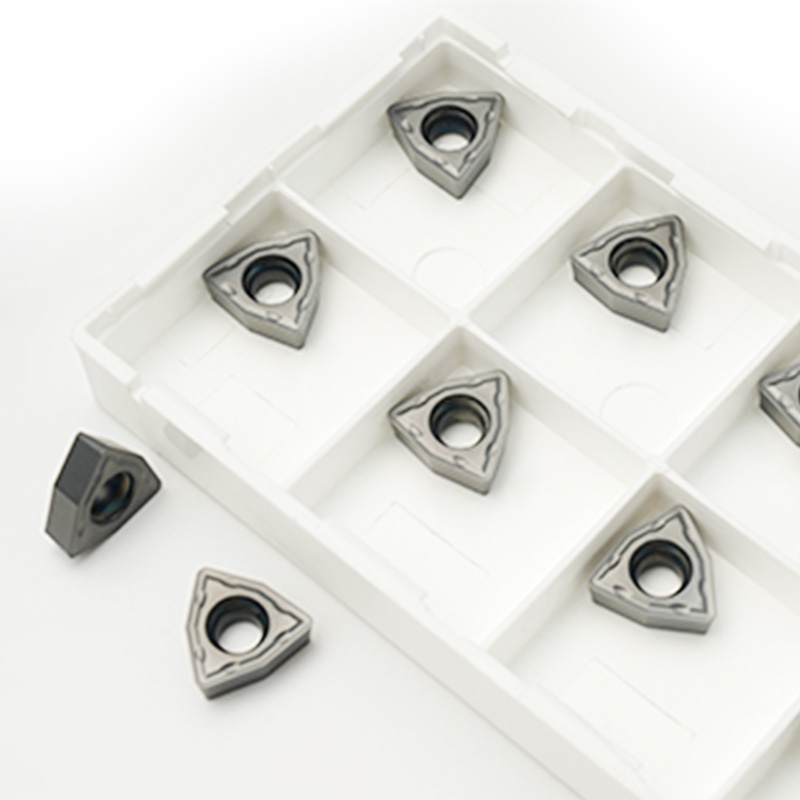
In the field of machining, cutting tool coatings have become indispensable for enhancing tool performance, extending tool life, and improving machining quality. However, with a wide variety of coating materials and types available, choosing the right one can be a complex decision. Here are several key aspects to consider when selecting appropriate cutting tool coatings.Workpiece MaterialThe nature of the workpiece material is a primary determinant in coating selection. For machining soft and ductile materials like aluminum and copper, coatings with low friction coefficients are ideal. Diamond – Like Carbon (DLC) coatings, for example, excel in reducing adhesion between the tool and the workpiece, effectively preventing built – up edge formation, a common issue when cutting these materials. When dealing with hard and abrasive materials such as hardened steels, titanium alloys, or nickel – based superalloys, coatings with high hardness and wear resistance are required. Titanium Aluminum Nitride (TiAlN) coatings are popular for these applications as they can withstand high temperatures and resist abrasive wear, maintaining the cutting edge’s integrity even under severe machining conditions. For cast iron, which is prone to generate a large amount of heat and cause tool wear due to its abrasive nature, coatings like Titanium Carbonitride (TiCN) can offer a good balance of hardness and toughness, protecting the tool from rapid degradation.Machining ConditionsCutting speed, feed rate, and depth of cut significantly influence the choice of coating. In high – speed machining operations where heat generation is intense, coatings with excellent thermal stability are necessary. Coatings such as AlCrN (Aluminum Chromium Nitride) can handle high temperatures without losing their hardness and protective properties, making them suitable for high – speed cutting of various materials. For operations with high feed rates and large depths of cut, which generate high cutting forces, coatings that enhance the tool’s strength and resistance to plastic deformation are preferred. Some multi – layer or nano – structured coatings are designed to provide enhanced mechanical properties under such demanding conditions. Additionally, if the machining process involves interrupted cuts, where the tool experiences sudden impacts, coatings that improve the tool’s toughness, like those with a metallic bonding layer, can reduce the risk of chipping and breakage.Coating PropertiesUnderstanding the properties of different coating materials is crucial. Hardness is a key property as it determines the coating’s ability to resist wear. Coatings like cubic boron nitride (CBN) – based coatings are extremely hard and are used for machining very hard materials. Wear resistance is closely related to hardness but also depends on the coating’s microstructure and its ability to form a protective oxide layer during machining. Oxidation resistance is important, especially in high – temperature machining, to prevent the coating from breaking down and losing its effectiveness. Friction – reducing properties are vital for materials that tend to stick to the tool, as mentioned earlier. Some coatings also offer chemical stability, preventing chemical reactions between the tool, the coating, and the workpiece material, which can occur when machining certain reactive materials.Tool MaterialThe base material of the cutting tool also affects coating selection. Carbide tools, which are widely used, can be paired with a variety of coatings depending on the application. For example, a fine – grain carbide tool used for precision machining may benefit from a thin, high – precision coating like TiN to maintain the tool’s sharpness and edge integrity. High – speed steel tools, on the other hand, may require coatings with good adhesion and the ability to improve the tool’s red – hardness, such as titanium – based coatings. Ceramic tools, known for their high hardness and wear resistance, can be coated with materials that enhance their toughness and reduce friction, enabling them to perform better in specific machining scenarios.

Cost – Benefit AnalysisCost is an important factor in coating selection. Some advanced coatings, such as those with complex nano – structures or rare elements, can be expensive. While they may offer superior performance in certain applications, it’s necessary to assess whether the increased cost justifies the benefits in terms of extended tool life, improved machining efficiency, and reduced scrap rates. In some cases, a more cost – effective coating option may be sufficient for less demanding machining tasks. For example, in small – scale production or general – purpose machining, a standard TiN coating may provide adequate performance at a lower cost compared to more specialized coatings.In conclusion, choosing the appropriate cutting tool coating requires a comprehensive assessment of the workpiece material, machining conditions, coating properties, tool material, and cost – benefit factors. By carefully considering these aspects, machinists and manufacturers can select the most suitable coating for their specific machining needs, optimizing tool performance, reducing production costs, and achieving high – quality machining results.
Contact us:[email protected]