

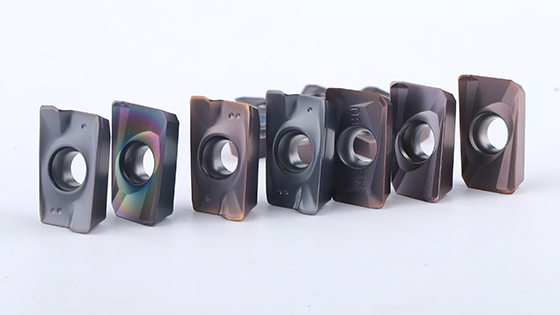
In the realm of machining, the choice of cutting tools significantly impacts the efficiency, quality, and cost – effectiveness of the manufacturing process. High – speed steel (HSS), cobalt – based, and solid carbide cutting tools are three popular options, each with its own unique characteristics, advantages, and ideal applications. Understanding these tools is crucial for making informed decisions that suit specific machining requirements.Material Properties and PerformanceHigh – speed steel is a versatile tool material known for its good balance of toughness and red – hardness. It can maintain its cutting edge at elevated temperatures compared to ordinary carbon steels, allowing for higher cutting speeds. HSS tools are relatively easy to manufacture and sharpen, making them a cost – effective choice for many general – purpose machining operations. However, their hardness and wear resistance are lower compared to cobalt – based and solid carbide tools, which limits their use in more demanding applications.Cobalt – based cutting tools are an upgraded version of high – speed steel, with cobalt added to enhance their performance. The inclusion of cobalt significantly improves the red – hardness and wear resistance of the tools, enabling them to operate at higher temperatures and cut harder materials more effectively. Cobalt – based tools also offer better resistance to adhesion and diffusion wear, making them suitable for machining heat – resistant alloys and stainless steels. While they are more expensive than standard HSS tools, their improved performance often justifies the higher cost in specific applications.Solid carbide cutting tools are made entirely from carbide, a composite material consisting of tungsten carbide particles bonded together with cobalt. These tools are renowned for their exceptional hardness, wear resistance, and stiffness. Solid carbide can withstand extremely high cutting speeds and heavy cutting forces, making it ideal for high – performance machining operations. Its superior wear resistance ensures long tool life, even when machining hard and abrasive materials. However, solid carbide is more brittle than HSS and cobalt – based materials, which requires careful handling and appropriate machining conditions to prevent tool breakage.

Application – Specific SuitabilityFor general – purpose machining tasks such as roughing, finishing, and drilling of mild steels, aluminum, and other relatively soft materials, high – speed steel tools are often a practical choice. They can handle a wide range of cutting speeds and feed rates, and their lower cost makes them suitable for small – scale production or when machining accuracy requirements are not extremely high. For example, in a job shop that frequently works on various projects with different materials and machining requirements, HSS tools can provide a flexible and cost – efficient solution.Cobalt – based cutting tools shine in applications involving heat – resistant alloys, stainless steels, and other difficult – to – machine materials. When machining components for the aerospace or power generation industries, where materials like Inconel and titanium alloys are commonly used, cobalt – based tools can maintain their cutting performance under high – temperature and high – stress conditions. Their ability to resist wear and maintain a sharp cutting edge ensures consistent machining quality and longer tool life in these demanding applications.Solid carbide cutting tools are the go – to option for high – precision, high – speed machining operations. They are widely used in industries such as automotive, electronics, and mold – making, where tight tolerances and excellent surface finishes are required. Solid carbide end mills, for instance, can achieve extremely fine details and smooth surfaces when machining complex 3D shapes in aluminum or hardened steel molds. Additionally, in high – speed machining centers, solid carbide tools can take full advantage of the machine’s capabilities, significantly reducing machining time while maintaining high accuracy.

Cost – Benefit AnalysisWhen considering the cost – benefit aspect, high – speed steel tools offer the lowest initial investment. Their affordability makes them accessible for small businesses or those with limited budgets. However, due to their relatively shorter tool life, the overall cost per part may increase in applications with high production volumes or when machining hard materials.Cobalt – based tools are more expensive than HSS tools but offer better performance in specific applications. The higher cost can be offset by the extended tool life and improved machining efficiency when working with difficult – to – machine materials. In industries where material costs are high and downtime due to tool changes is costly, the investment in cobalt – based tools can prove to be cost – effective in the long run.Solid carbide cutting tools have the highest upfront cost among the three. However, their exceptional performance, long tool life, and ability to achieve high – precision results often result in significant savings in terms of reduced machining time, lower scrap rates, and fewer tool replacements. In high – volume production and precision – focused industries, the cost – effectiveness of solid carbide tools becomes evident, despite the higher initial expense.In conclusion, the choice between high – speed steel, cobalt – based, and solid carbide cutting tools depends on a variety of factors, including the material being machined, the required machining accuracy, the production volume, and the budget. By carefully evaluating these aspects and understanding the unique characteristics of each tool type, manufacturers can select the most appropriate cutting tools to optimize their machining processes, improve productivity, and achieve the best possible results.
Contact us:[email protected]