

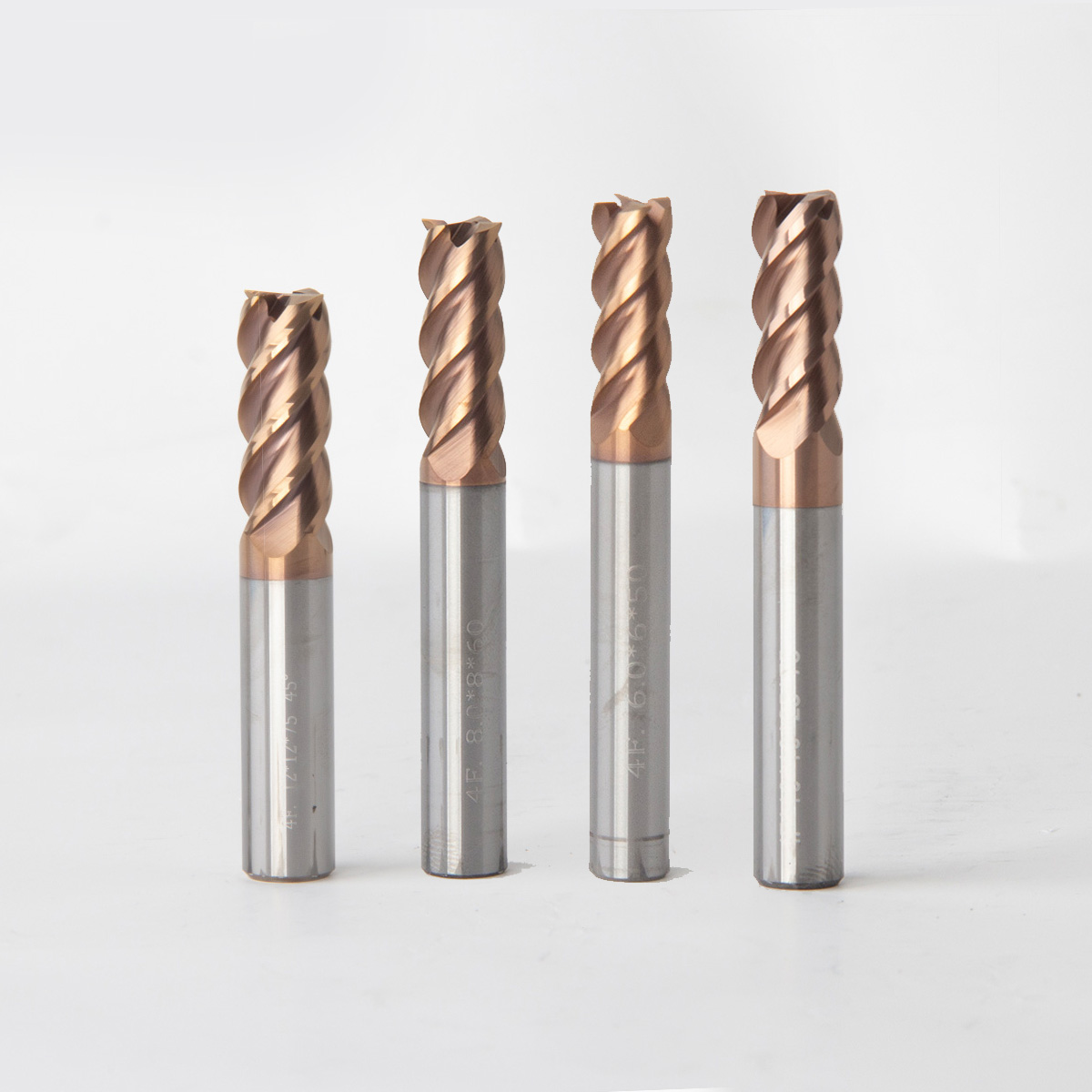
Selecting the appropriate number of cutting edges for end mills is a crucial decision that can significantly impact machining performance, efficiency, and the quality of the final product. Several factors need to be carefully considered to make the right choice.Workpiece MaterialThe nature of the workpiece material plays a pivotal role in determining the number of cutting edges. For soft and ductile materials like aluminum alloys, brass, or plastics, end mills with fewer cutting edges, such as two – flute models, are often a good option. Fewer cutting edges create larger chip – evacuation spaces, which is essential for these materials that tend to produce long, stringy chips. This allows for efficient removal of chips, preventing clogging and ensuring a smooth cutting process. On the other hand, when machining hard and brittle materials like hardened steels, cast irons, or titanium alloys, end mills with more cutting edges, such as four – flute or even six – flute models, can be more suitable. More cutting edges distribute the cutting forces over a larger area, reducing the stress on each individual edge and helping to maintain the integrity of the tool during the demanding machining of these tough materials.Machining OperationsThe type of machining operation also dictates the optimal number of cutting edges. For roughing operations, where the main goal is to remove a large amount of material quickly, end mills with fewer cutting edges are typically preferred. Two – or three – flute end mills can take larger cuts and handle the continuous flow of chips more effectively, enabling faster material removal. In contrast, for finishing operations, where achieving a smooth surface finish and tight dimensional tolerances are crucial, end mills with more cutting edges shine. Four – or more – flute end mills can make lighter cuts and have more cutting edges in contact with the workpiece at any given time, resulting in a smoother surface and better accuracy. For operations like slotting, especially narrow slots, two – flute end mills are often the go – to choice as they can create the necessary width while providing sufficient space for chip evacuation within the confined slot.Cutting ParametersCutting speed, feed rate, and depth of cut are important considerations when choosing the number of cutting edges. Higher cutting speeds and feed rates generally work better with end mills that have more cutting edges. More cutting edges can handle the increased material removal rate and distribute the heat generated during high – speed machining more evenly, reducing the risk of tool wear and breakage. However, if the depth of cut is large, end mills with fewer cutting edges may be more appropriate to prevent excessive loading on the tool. For instance, when performing deep – pocket machining, a two – or three – flute end mill can handle the deep cuts and large chip volumes more effectively than a multi – flute end mill, which might struggle with chip evacuation and experience increased cutting forces.Tool Rigidity and Machine CapabilityThe rigidity of the end mill and the capabilities of the machining machine also influence the choice of cutting – edge number. A less – rigid machine or a long – reach end mill setup may benefit from fewer cutting edges. Fewer cutting edges mean lower cutting forces, reducing the likelihood of tool deflection and vibration. On the contrary, a rigid machine with high spindle power can support end mills with more cutting edges, allowing for more aggressive machining. Additionally, the diameter of the end mill matters. Small – diameter end mills may not be able to accommodate a large number of cutting edges without sacrificing chip – evacuation space or structural integrity, so they often work best with two or three cutting edges. Larger – diameter end mills, on the other hand, can incorporate more cutting edges while still maintaining sufficient strength and chip – handling capabilities.

Cost – Benefit ConsiderationCost is also a factor in the decision – making process. End mills with more cutting edges are usually more expensive due to their more complex manufacturing process. However, they may offer longer tool life and higher machining efficiency in certain applications, which can offset the initial cost. For small – scale production or jobs with tight budgets, end mills with fewer cutting edges might be a more cost – effective choice, especially if they can still meet the required machining quality and production schedule. In high – volume production, where efficiency and consistency are paramount, investing in end mills with more cutting edges can lead to significant savings in the long run by reducing machining time and tool – change frequency.In conclusion, choosing the number of cutting edges for end mills requires a comprehensive evaluation of the workpiece material, machining operations, cutting parameters, tool rigidity, machine capabilities, and cost – benefit factors. By carefully weighing these aspects, machinists can select the most suitable end mill for each task, optimizing machining performance, reducing costs, and achieving excellent results in their manufacturing processes.
Contact us:[email protected]