

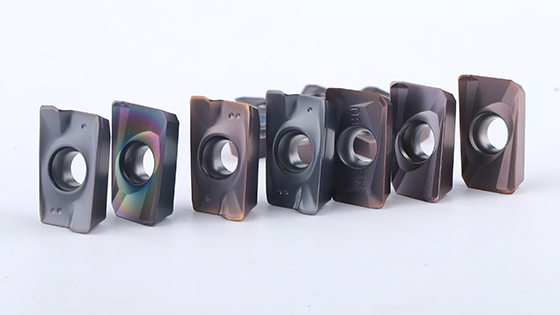
Aluminum is widely used in various industries due to its lightweight, corrosion – resistance, and good formability. When machining aluminum, selecting the right cemented carbide blades is crucial for achieving efficient, high – quality results. Here are several key factors to consider when choosing cemented carbide blades for aluminum machining.Blade MaterialThe base material of the cemented carbide blade significantly impacts its performance when cutting aluminum. For aluminum machining, a fine – grain or ultra – fine – grain cemented carbide is often preferred. The smaller grain size provides enhanced edge sharpness and wear resistance, allowing for smoother cutting and reduced burr formation. Compared to coarser – grain counterparts, fine – grain cemented carbide can better handle the relatively soft and ductile nature of aluminum, preventing issues like built – up edge (BUE) formation. Additionally, the choice of binder content in the cemented carbide matters. A lower cobalt content may offer higher hardness and wear resistance, which is beneficial for high – speed machining of aluminum, while a slightly higher cobalt content can increase the toughness of the blade, reducing the risk of chipping during interrupted cuts or when machining aluminum alloys with hard inclusions.Geometric DesignThe geometric design of the blade plays a vital role in aluminum machining. A large positive rake angle is highly recommended for aluminum. This angle reduces the cutting forces, enabling the blade to easily penetrate the soft aluminum material and promoting smooth chip flow. As a result, it minimizes the chances of BUE, which can degrade the surface finish and dimensional accuracy. A suitable relief angle is also important to prevent the blade from rubbing against the workpiece, reducing heat generation and wear. For aluminum, a relatively large relief angle can be used to ensure sufficient clearance. In terms of the number of flutes, two – or three – flute blades are commonly chosen for aluminum machining. Fewer flutes provide larger chip – evacuation spaces, which is essential for efficiently removing the long, stringy chips that aluminum tends to produce. This prevents chip clogging and allows for continuous, uninterrupted cutting.

CoatingCoatings on cemented carbide blades can greatly enhance their performance when machining aluminum. Diamond – Like Carbon (DLC) coatings are an excellent choice. DLC coatings have an extremely low coefficient of friction, which significantly reduces the adhesion of aluminum to the blade surface, effectively preventing BUE. They also offer good wear resistance, protecting the blade from the abrasive action of aluminum particles during machining. Another option is titanium – based coatings such as TiAlN. These coatings can withstand high temperatures generated during high – speed aluminum machining and provide good oxidation resistance, maintaining the blade’s cutting performance over extended periods. However, when using titanium – based coatings, it’s important to ensure that the coating is well – bonded to the blade substrate to avoid delamination issues that could occur due to the soft nature of aluminum and the high – speed cutting conditions.Chip – Evacuation FeaturesEfficient chip evacuation is a key consideration when machining aluminum. Blades with optimized chip – evacuation features, such as deep and wide flutes with smooth surfaces, are ideal. Deep flutes can accommodate long aluminum chips without clogging, while smooth surfaces reduce the friction between the chips and the flutes, facilitating their removal from the cutting zone. Some advanced aluminum – specific cemented carbide blades may also have special chip – breaker geometries on the cutting edges. These geometries break the long aluminum chips into smaller, more manageable pieces, further improving chip evacuation and reducing the risk of tool damage caused by chip entanglement.Application – Specific RequirementsThe specific machining application also dictates the choice of cemented carbide blade. For roughing operations, where the goal is to remove a large amount of material quickly, blades with stronger cutting edges and larger chip – evacuation capabilities are preferred. These blades can withstand higher cutting forces and handle the continuous flow of chips. In contrast, for finishing operations, where achieving a smooth surface finish and tight dimensional tolerances are crucial, blades with finer edge geometries and better surface – finishing capabilities are needed. Additionally, if the machining involves complex shapes or thin – walled aluminum components, blades with lower cutting forces and higher precision, such as those with specialized geometries and coatings, should be selected to prevent distortion and ensure accurate machining results.In conclusion, choosing the right cemented carbide blades for aluminum machining requires a comprehensive evaluation of the blade material, geometric design, coating, chip – evacuation features, and application – specific requirements. By carefully considering these factors, machinists can select blades that not only improve the efficiency and quality of aluminum machining but also extend the blade life, ultimately reducing production costs and enhancing overall productivity in aluminum – related manufacturing processes.