

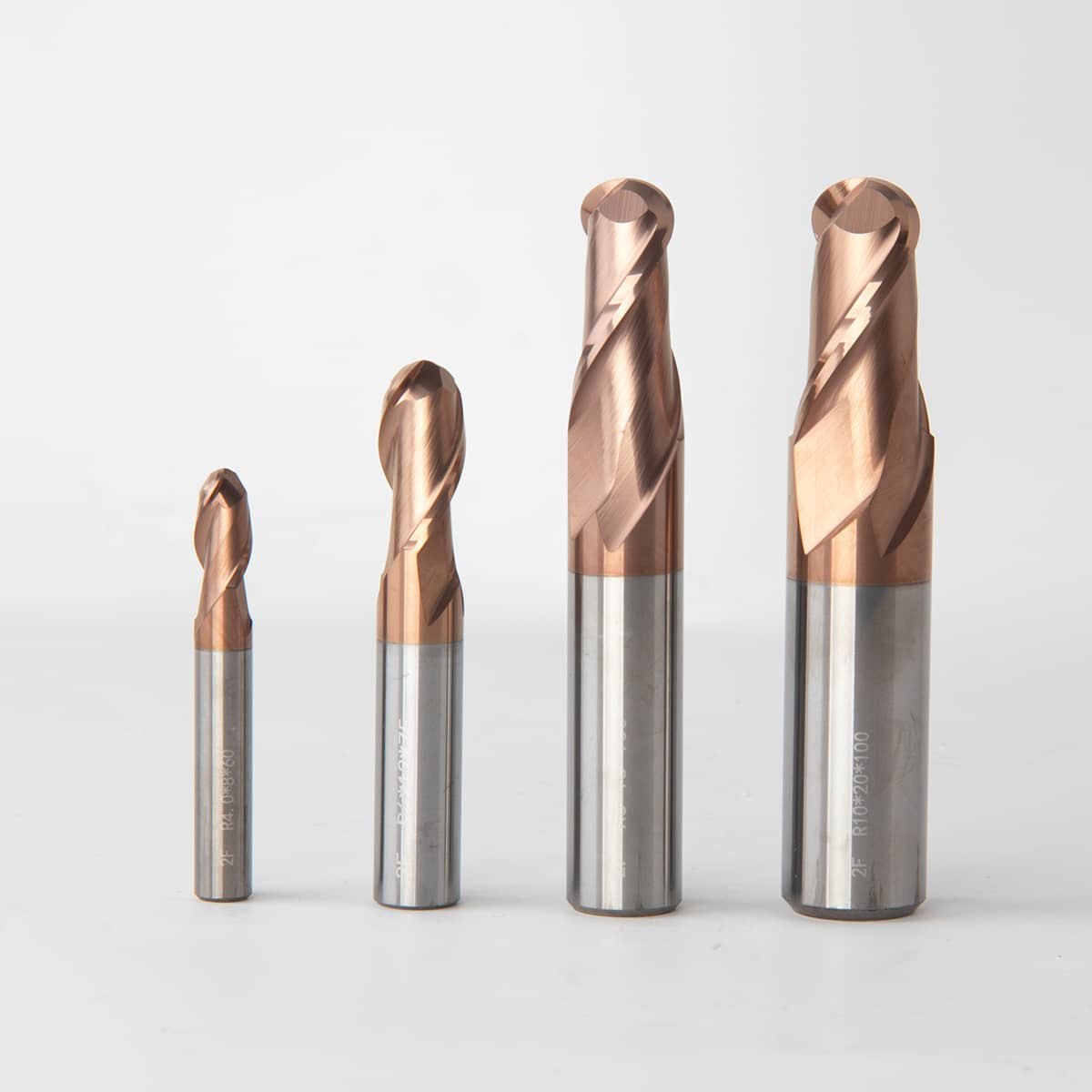
When dealing with HRC60 ball – nose end mills, which are designed for machining extremely hard materials, accurately identifying their quality is crucial for achieving successful machining results. Here are several key aspects to consider when evaluating the quality of these specialized end mills.Material InspectionThe material of the HRC60 ball – nose end mill is the foundation of its quality. High – quality end mills are typically made from premium – grade carbide, often with a high percentage of fine – grain tungsten carbide particles bonded by cobalt. Check for any documentation or markings that indicate the specific material composition and grade. Inferior quality end mills might use lower – grade carbide or have an inconsistent particle size distribution, which can significantly reduce the tool’s hardness, wear resistance, and overall performance. A simple scratch test on a non – critical part of the end mill (if possible) can also provide some insights. A high – quality carbide end mill should resist scratching easily, while a poor – quality one may show visible marks more readily.Manufacturing PrecisionExamine the machining precision of the ball – nose end mill. Use precision measuring tools like a high – accuracy caliper or a micrometer to check the diameter of the shank and the ball – nose. Deviations from the specified dimensions can lead to poor cutting performance, vibrations, and inaccurate machining results. Additionally, inspect the surface finish of the flute and the ball – nose. A high – quality end mill will have a smooth, consistent surface finish without any visible tool marks, ridges, or burrs. Rough surfaces not only increase friction during machining but can also act as stress concentrators, potentially leading to premature tool failure.Coating AssessmentMany HRC60 ball – nose end mills come with specialized coatings to enhance their performance. Inspect the coating for uniformity and adhesion. The coating should cover the entire cutting edge and flute surface evenly without any patches, bubbles, or peeling. Common high – performance coatings for machining hard materials include TiAlN, AlCrN, etc. A high – quality coating not only improves the wear resistance and hardness of the end mill but also reduces friction, enabling higher cutting speeds and better surface finishes. You can also inquire about the coating thickness and the manufacturing process used to apply the coating, as these factors can significantly impact the coating’s effectiveness.

Brand Reputation and CertificationConsider the brand reputation of the HRC60 ball – nose end mill. Established brands with a history of producing high – quality cutting tools are more likely to adhere to strict quality control standards. Look for customer reviews and testimonials online to gauge the real – world performance of the end mills from different brands. Additionally, check if the end mill has relevant certifications, such as ISO certifications. These certifications indicate that the manufacturer has met certain international quality and manufacturing standards, providing an extra layer of assurance regarding the product’s quality.
Contact us:[email protected]