

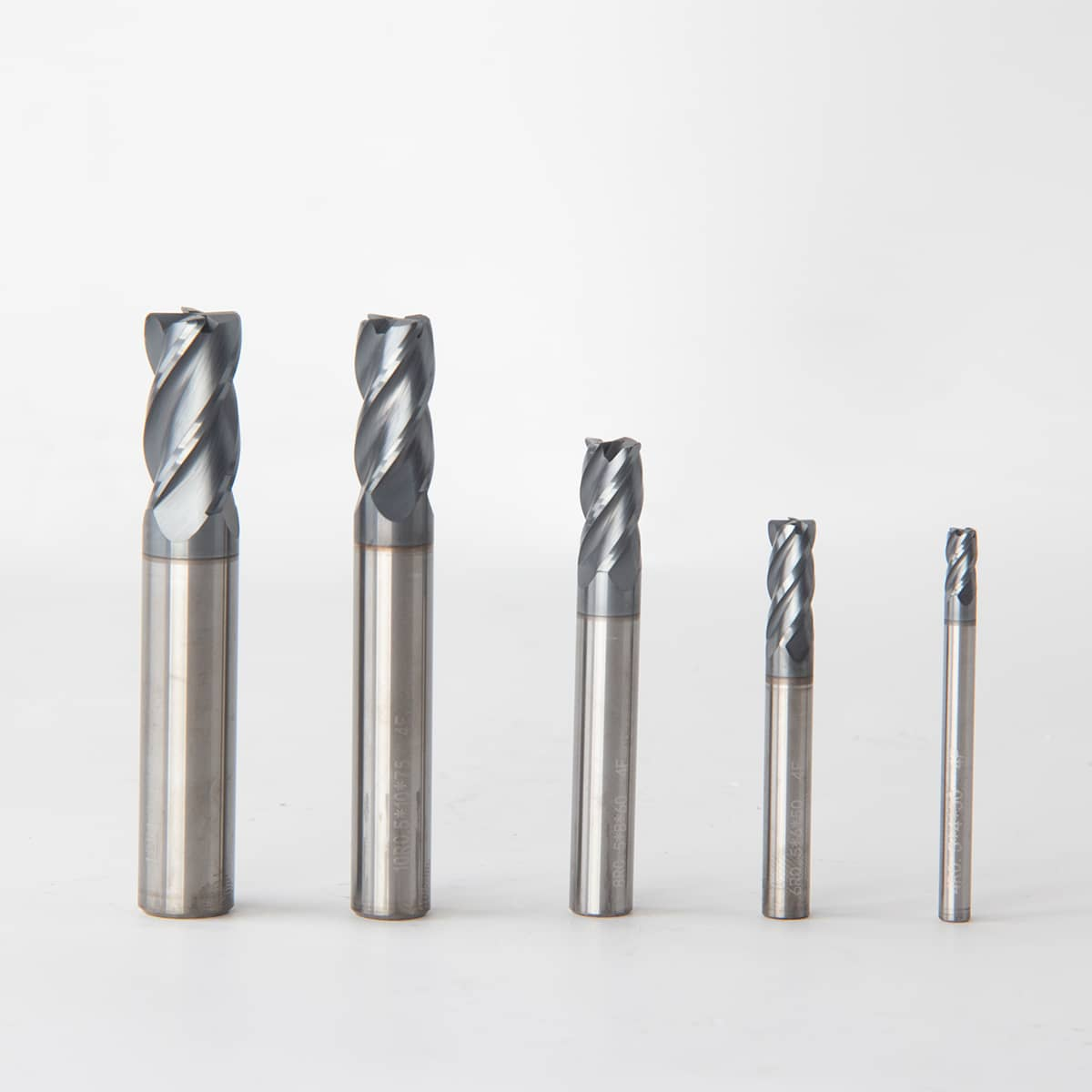
When it comes to machining materials with a hardness of HRC50, angle milling cutters exhibit a set of distinctive characteristics that are crucial for achieving optimal results.High – Performance Cutting EdgeOne of the primary features of angle milling cutters used for HRC50 materials is their robust cutting edge. Typically made from high – quality carbide or ceramic materials, these cutting edges are designed to withstand the high cutting forces and temperatures generated during machining. Carbide – tipped angle milling cutters offer a good balance between toughness and wear resistance, allowing them to cut through the hard material effectively. Ceramic – based angle milling cutters, on the other hand, can operate at higher speeds and offer superior wear resistance, making them suitable for more aggressive machining strategies. The sharp and precise cutting edge geometry of these angle milling cutters ensures efficient chip formation, reducing the likelihood of material work – hardening and improving the overall cutting efficiency.Enhanced Wear ResistanceMachining HRC50 materials subjects the milling cutter to significant wear due to the hardness of the workpiece. Angle milling cutters are engineered with enhanced wear – resistant coatings, such as TiAlN (Titanium Aluminum Nitride) or TiCN (Titanium Carbonitride). These coatings not only increase the surface hardness of the cutter but also reduce friction between the cutting edge and the workpiece. As a result, the rate of tool wear is significantly reduced, extending the tool life of the angle milling cutter. This is particularly important in production environments where minimizing tool – change downtime and reducing overall machining costs are essential.

Precision and Surface FinishDespite the challenges posed by hard materials, angle milling cutters are capable of achieving high – precision machining and a good surface finish on HRC50 workpieces. Their precise cutting edge geometry, combined with the rigidity of the cutter body, enables accurate contouring and dimension control. The ability to maintain a stable cutting process also contributes to a smoother surface finish. In applications where the surface quality of the machined part is critical, such as in mold – making or aerospace component manufacturing, angle milling cutters can meet the stringent requirements by minimizing surface roughness and ensuring dimensional accuracy.Specialized Geometry for Hard – Material MachiningAngle milling cutters used for HRC50 materials often feature specialized geometries. For example, they may have a larger rake angle to reduce cutting forces and improve chip flow, or a stronger relief angle to prevent the cutter from binding against the workpiece. The number of flutes on the cutter is also carefully designed. Fewer flutes can provide stronger cutting edges, which are better able to withstand the high forces involved in machining hard materials, while more flutes can offer a better surface finish at the cost of slightly reduced cutting strength. These specialized geometries are tailored to optimize the performance of the angle milling cutter when working with HRC50 materials.

In conclusion, angle milling cutters demonstrate unique characteristics when machining HRC50 materials. Their high – performance cutting edges, enhanced wear resistance, thermal stability, precision machining capabilities, and specialized geometries make them well – suited for the demanding task of shaping hard materials. Understanding these characteristics is essential for machinists to select the right angle milling cutter and optimize the machining process, ensuring both efficiency and quality in the production of components from HRC50 – hardness materials.