

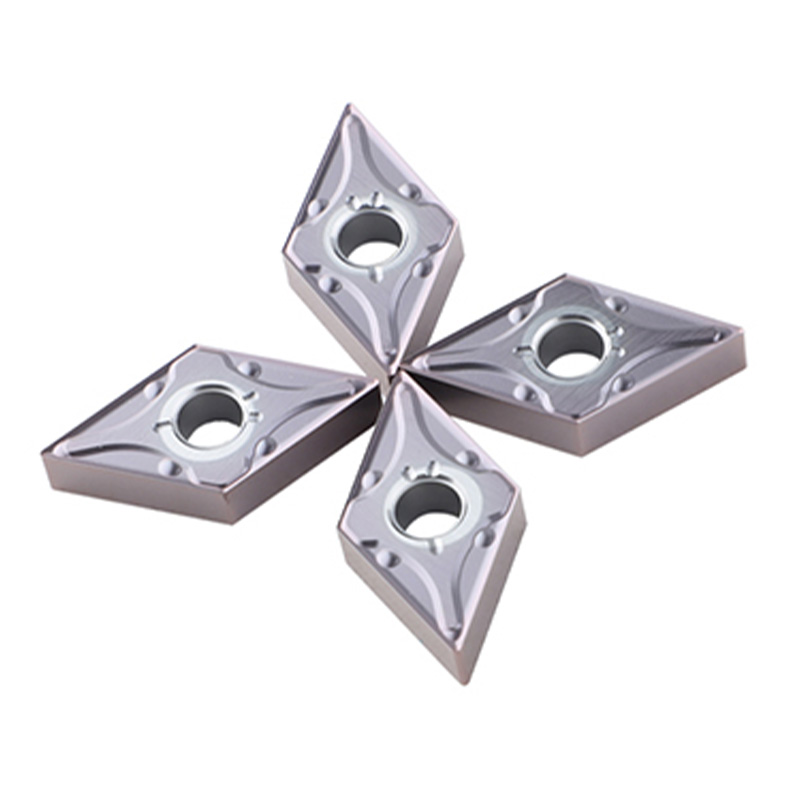
Indexable inserts have revolutionized modern machining by offering superior cutting performance compared to traditional solid tools. Their design allows for high-speed, high-precision, and stable metal removal, making them indispensable in CNC machining, turning, milling, and drilling. But what makes them so effective? Let’s explore the key factors behind their efficiency, accuracy, and stability.

1. Advanced Cutting Geometry for Efficiency
Indexable inserts are engineered with optimized rake angles, chip breakers, and edge preparations. These geometries reduce cutting forces, allowing higher feed rates and speeds without excessive tool wear. The result? Faster material removal and shorter cycle times, boosting productivity in industrial applications.
2. Precision-Grade Manufacturing for Accuracy
Inserts are produced using ultra-precise grinding and coating technologies. Tight tolerances ensure consistent cutting-edge sharpness, while advanced coatings (like TiAlN or diamond) enhance wear resistance. This precision guarantees uniform chip formation, minimizing dimensional deviations and improving surface finish.
3. Rigid Toolholder Systems for Stability
Unlike traditional tools that deflect under load, indexable inserts are mounted in rigid holders with secure clamping mechanisms. This minimizes vibration and chatter, even during heavy cuts. The stability ensures smoother machining, longer tool life, and better part quality.
4. Quick Replaceability Reduces Downtime
When an insert edge wears out, operators can simply rotate or replace it—no regrinding or tool resetting is needed. This quick-change capability keeps machines running longer with minimal interruptions, maximizing uptime in high-volume production.
5. Specialized Coatings & Materials for Tough Applications
Modern inserts use carbide, ceramic, or CBN (cubic boron nitride) substrates, combined with heat-resistant coatings. These materials withstand extreme temperatures and abrasive conditions, enabling efficient machining of hardened steels, superalloys, and composites.


Conclusion
Indexable inserts deliver efficiency, precision, and stability through intelligent design, high-quality materials, and advanced manufacturing techniques. By leveraging these advantages, manufacturers achieve faster production rates, tighter tolerances, and reduced machining costs.
Have you experienced the benefits of indexable inserts in your operations? Contact us:[email protected]