

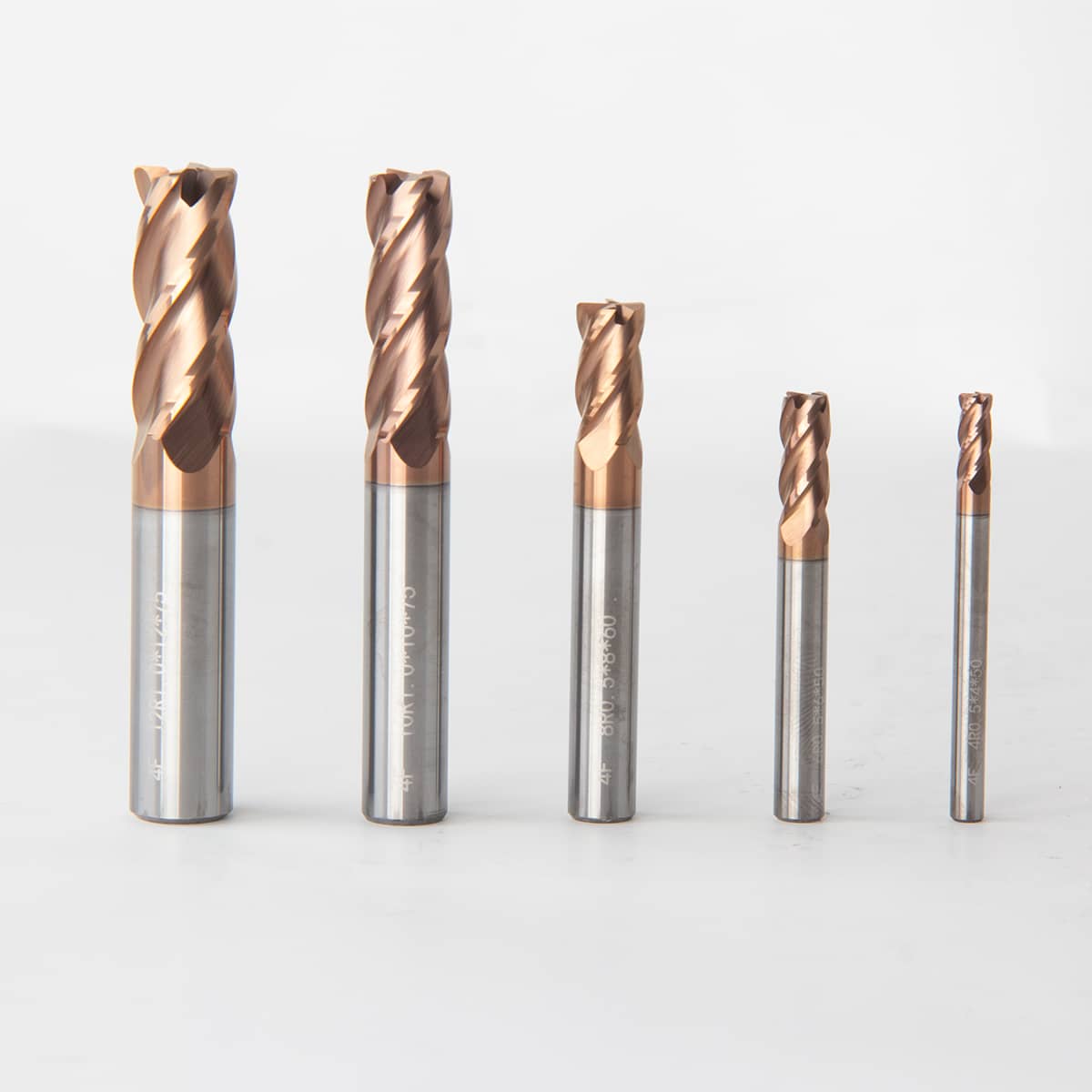
When it comes to precision machining, selecting the right tool is crucial for achieving optimal performance, efficiency, and surface quality. Among the many cutting tools used in manufacturing, end mills are some of the most versatile and widely used tools. Understanding the different types of end mills and their applications can help you make the right choice for your machining needs. This guide will explore the various types of end mills, categorized by their flute count, shape, coating, material, and specific applications.
1. By Number of Flutes
End mills come in different flute counts, each suited for specific machining tasks. The flute count affects the cutting efficiency, chip removal, and surface finish of the workpiece.
- Single Flute End Mill: Single flute end mills are ideal for high-speed cutting and light machining. With only one cutting edge, they are best used for softer materials such as aluminum and plastics. Their design allows for faster chip removal, making them an excellent choice for operations that require high speeds, like engraving or slotting.
- Double Flute End Mill: Double flute end mills are commonly used for machining harder materials, such as steel and stainless steel. They provide smoother cutting performance compared to single-flute tools and offer better tool stability, making them suitable for general-purpose machining tasks.
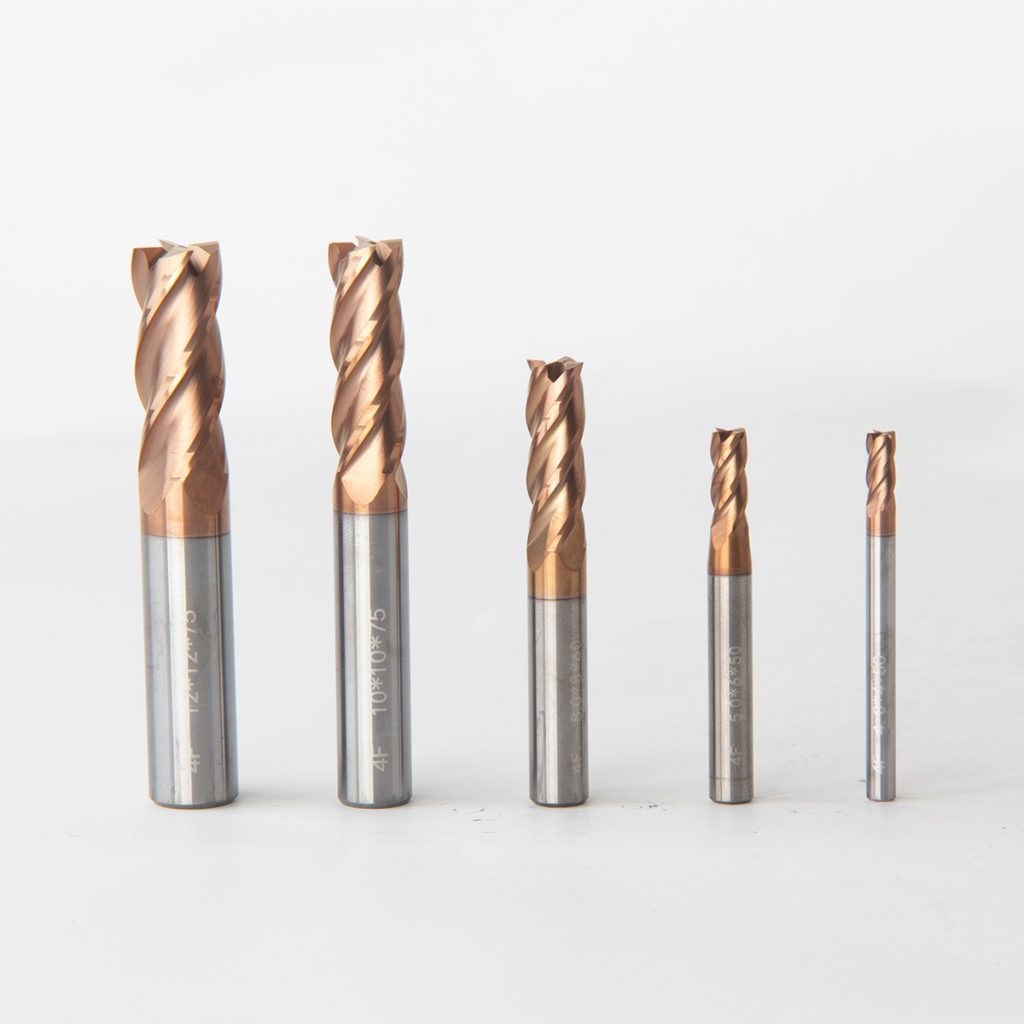
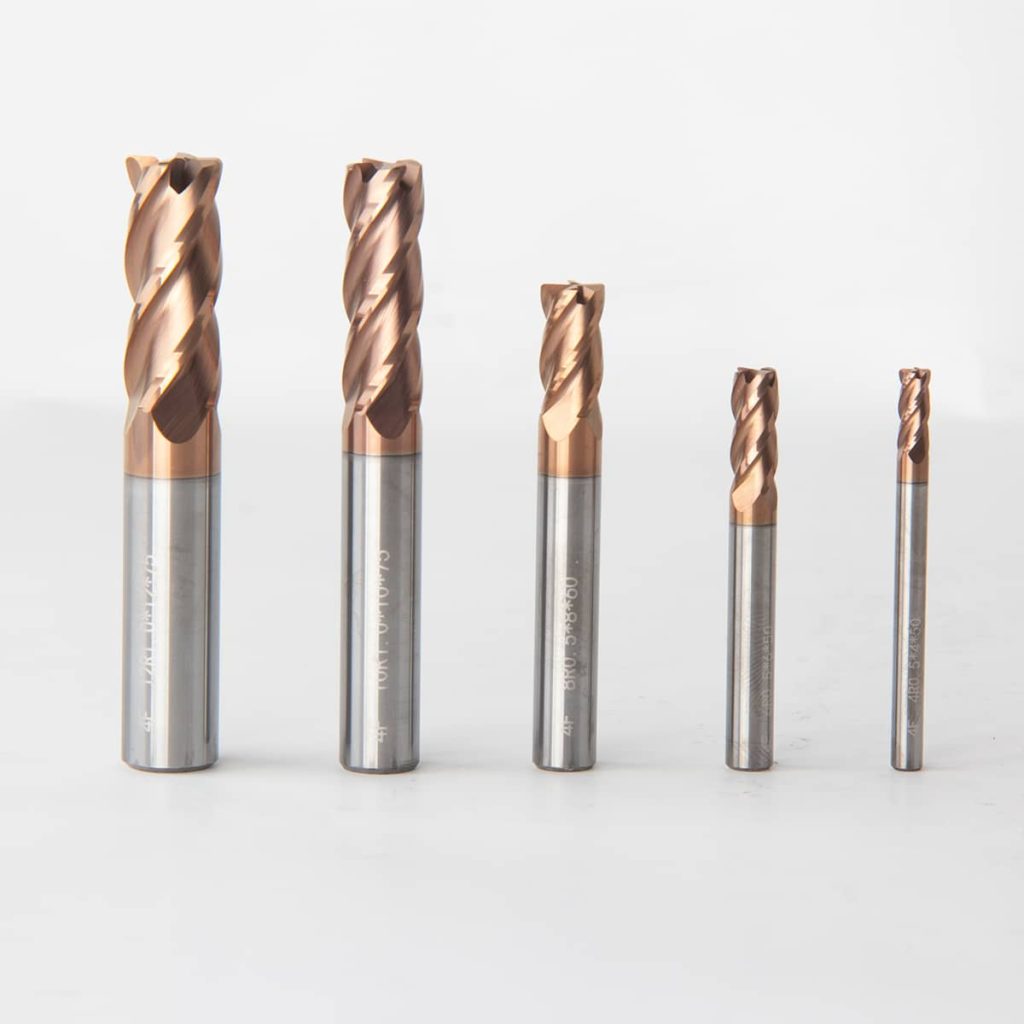
- Four-Flute End Mill: Four-flute end mills are ideal for high-precision machining. They offer higher cutting efficiency, allowing for faster material removal without compromising surface finish. These end mills are commonly used in industries where precision is paramount, such as aerospace and automotive manufacturing.
- Multiple Flute End Mill: For high-efficiency machining, multiple flute end mills are a great option. These tools have more than four cutting edges and are typically used in high-speed machining operations where maximum material removal is necessary. They are commonly found in industries like mold making, automotive, and high-volume manufacturing.
2. By Tool Shape
The shape of the end mill’s cutting edge plays a significant role in determining the type of material it can effectively cut and the complexity of the part it can machine.
- Flat End Mill: Flat end mills have a straight cutting edge, making them perfect for roughing and finishing flat surfaces. These end mills are often used for slotting, face milling, and general-purpose milling. Their simplicity makes them a versatile choice for many machining operations.
- Ball Nose End Mill: With a semi-spherical tip, the ball nose end mill is specifically designed for contouring and 3D surface machining. These tools are ideal for creating complex shapes, such as molds, and are commonly used in industries like mold-making, die-casting, and machining curved surfaces.
- Corner Radius End Mill: Featuring a rounded corner, the corner radius end mill is perfect for cutting internal angles. It reduces tool wear and improves cutting performance by spreading the cutting forces evenly. This tool is often used for finishing operations and is especially useful when machining fillets or corners.
- Tapered End Mill: Tapered end mills have a conical shape and are typically used for milling slopes or creating conical shapes. Their versatility makes them suitable for machining complex geometries and detailed workpieces. Tapered end mills are commonly used in applications like engraving, mold-making, and automotive part manufacturing.
3. By Coating and Material
The material and coating of an end mill directly impact its durability, wear resistance, and performance in high-temperature environments.
- Uncoated End Mill: Uncoated end mills are typically used for machining softer materials like aluminum and brass. While they are cost-effective, they have less wear resistance and are generally not recommended for tougher materials. They work well in low-speed applications or where tool longevity is not a primary concern.
- Titanium Nitride (TiN) Coated End Mill: Titanium Nitride (TiN) coated end mills are known for their enhanced wear resistance. The TiN coating helps protect the tool from wear and corrosion, making it an excellent choice for tougher materials like steel and stainless steel. The coating also improves heat resistance, allowing for faster cutting speeds and longer tool life.
- Titanium Aluminum Nitride (TiAlN) Coated End Mill: TiAlN-coated end mills offer superior thermal stability, making them perfect for high-temperature machining applications. This coating provides excellent performance when machining high-hardness materials, such as titanium and hardened steels. TiAlN is commonly used in industries where tools are subjected to intense heat, like aerospace and automotive manufacturing.
- Diamond Coated End Mill: Diamond-coated end mills are the hardest and most wear-resistant tools available. They are used for machining extremely hard materials such as ceramics, stone, and composites. The diamond coating ensures that the tool retains its sharpness, even under the most demanding conditions, making it a top choice for precision work in industries like aerospace, medical device manufacturing, and stone machining.
4. By Material Type
The material of the end mill determines its strength, toughness, and suitability for different machining applications.
- High-Speed Steel (HSS) End Mill: High-speed steel (HSS) end mills are known for their toughness and versatility. HSS tools are ideal for machining low to medium-hardness materials and are commonly used in applications that don’t require high cutting speeds. Their affordability makes them a popular choice for general-purpose machining.
- Carbide End Mill: Carbide end mills offer superior cutting performance and wear resistance, making them the tool of choice for high-speed and high-volume machining. Carbide tools are ideal for machining harder materials, such as stainless steel and titanium, and they can operate at higher speeds and temperatures than HSS tools.
5. Special Purpose End Mills
Some end mills are designed for specialized applications that require unique cutting capabilities.
- Spiral End Mill: Spiral end mills feature a spiral-shaped cutting edge that reduces cutting forces, making them perfect for high-efficiency machining. These tools are especially useful for materials that require chip removal at high speeds, such as aluminum and plastics.
- Face Mill: Face mills are used primarily for face milling operations, where the tool cuts the flat surface of a workpiece. These mills are typically equipped with multiple cutting edges to ensure efficient material removal and are ideal for machining large, flat surfaces in high-volume production environments.
Conclusion
Choosing the right end mill for your precision machining application is essential for achieving high-quality results. Whether you’re working with soft materials or hard alloys, selecting the appropriate flute count, tool shape, coating, and material will help optimize your cutting process. By understanding the various types of end mills and their specific applications, you can make informed decisions that will improve both the efficiency and precision of your machining operations. Remember, the key to successful machining lies in the proper selection of your cutting tools.
Contact us: [email protected]