

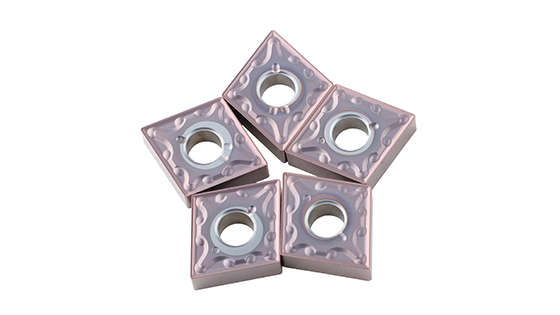
In the complex and highly – specialized automotive manufacturing industry, various types of blades play crucial roles in different production processes. Understanding these blades is essential for ensuring the quality, efficiency, and precision of automotive component manufacturing.One of the most commonly used types is the turning blade. Turning blades are employed in lathe operations, which are vital for shaping cylindrical automotive parts such as axles, shafts, and engine crankshafts. These blades come in different geometries, including single – point and multi – point designs. Single – point turning blades are often used for roughing operations, where large amounts of material need to be removed quickly. They have a sharp, single cutting edge that can handle high – speed rotations and heavy cutting forces. Multi – point turning blades, on the other hand, are better suited for finishing operations. With multiple cutting edges, they can create smooth surfaces with high precision, meeting the strict tolerances required for automotive components.Milling blades are another important category in automotive manufacturing. Milling machines use these blades to remove material from flat surfaces, slots, and complex 3D shapes. In the production of engine blocks, cylinder heads, and transmission cases, milling blades are used to create precise mating surfaces, coolant passages, and oil galleries. There are different subtypes of milling blades, such as end mills, face mills, and ball – nose mills. End mills are versatile and can be used for slotting, contouring, and pocketing operations. Face mills are designed for machining flat surfaces and are highly efficient for large – scale material removal. Ball – nose mills, with their rounded cutting edges, are ideal for creating curved surfaces and 3D contours, which are common in automotive body parts and interior components.

Drilling blades, specifically those used in automotive applications, also come in a variety of forms. Twist drills are the most basic type, widely used for creating simple holes in automotive parts. However, for more demanding applications, such as deep – hole drilling in engine blocks or creating holes in hard materials like cast iron and aluminum alloys, specialized U – drill blades or gun drills are preferred. U – drill blades, with their efficient chip evacuation and internal cooling systems, can handle deep – hole drilling with high precision. Gun drills, known for their long and slender design, are capable of drilling extremely deep holes with minimal deflection, making them suitable for applications where hole straightness and accuracy are critical.In addition to these machining blades, automotive manufacturing also utilizes blades in cutting and trimming operations. For example, shearing blades are used in sheet – metal processing to cut large sheets of metal into smaller, more manageable pieces. These blades have sharp, parallel edges that can cleanly cut through metal sheets, ensuring accurate dimensions and minimal burrs. Trim blades, on the other hand, are used to trim excess material from automotive components, such as plastic parts, rubber seals, and composite materials. They are designed to provide a clean and precise cut, enhancing the overall appearance and functionality of the parts.Furthermore, in the field of automotive stamping, punch and die blades are indispensable. Punches are used to create holes or shapes in metal sheets, while dies form the cavities or shapes that the metal is pressed into. These blades need to be extremely durable and precise, as they are subjected to high forces and repeated impacts during the stamping process. High – quality tool steels or carbide materials are often used to manufacture punch and die blades to ensure long service life and consistent performance.

In conclusion, the automotive industry relies on a wide array of blades, each with its own unique design, characteristics, and applications. From turning and milling to drilling, cutting, and stamping, these blades work together to transform raw materials into the high – quality components that make up modern vehicles. By understanding the different types of automotive blades and their specific uses, manufacturers can optimize their production processes, improve product quality, and stay competitive in the ever – evolving automotive market.
Contact us:[email protected]