

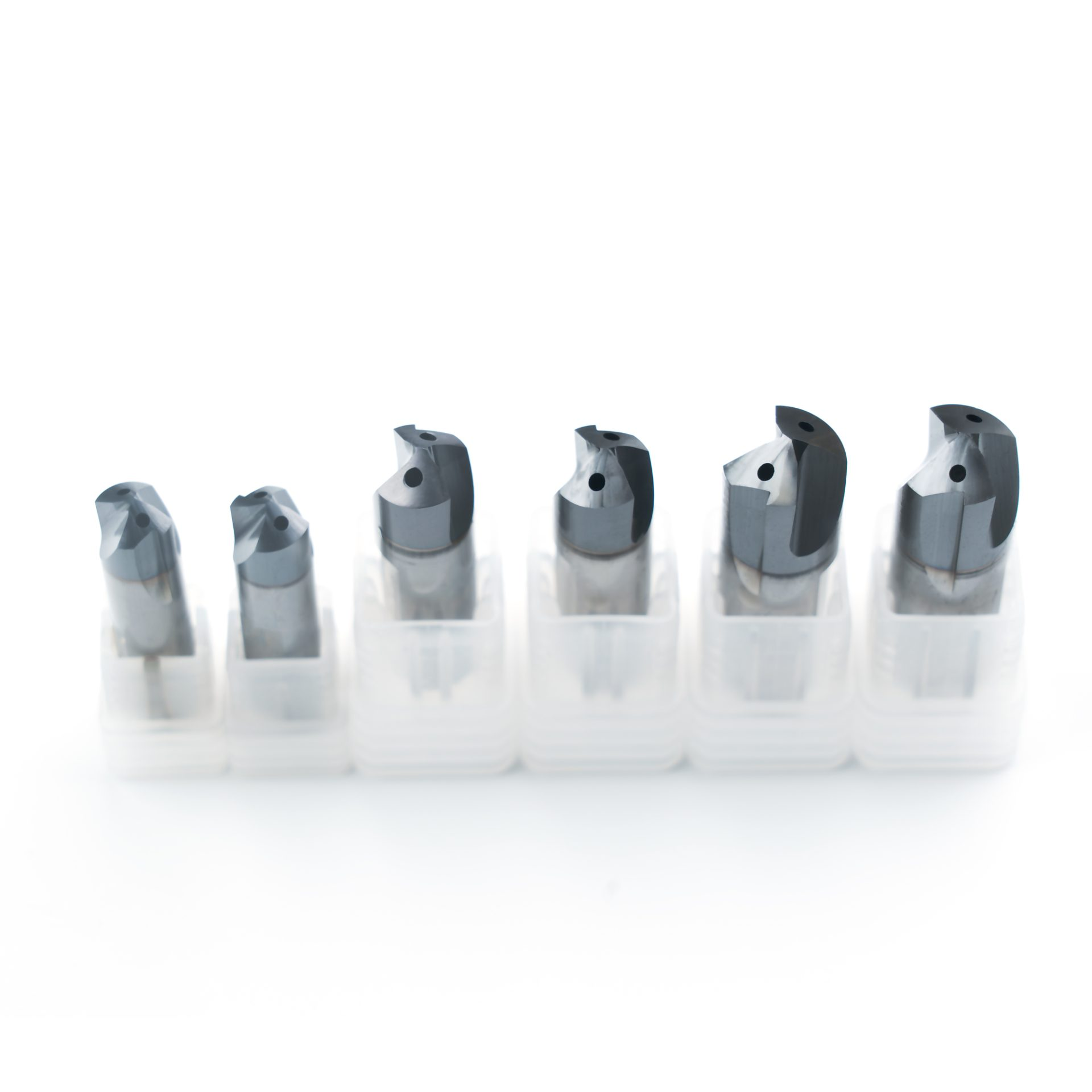
1. Fundamental Purpose and Design
Center Drills are short, rigid tools primarily used to create starter holes (center holes) for lathe work or to guide larger drills. They feature a combined pilot tip and countersink angle (typically 60°), ensuring precise alignment for subsequent operations. Deep Hole Drills, in contrast, are specialized long-reach tools designed for drilling holes with depth-to-diameter ratios exceeding 5:1. They incorporate unique geometries (e.g., gun drills, BTA drills) with internal coolant channels to evacuate chips and reduce heat buildup in deep cavities.
2. Tool Geometry and Cutting Action
Center drills have a short, stiff body with a tapered end to prevent deflection during initial spotting. Their cutting edges are optimized for shallow, accurate piloting rather than material removal. Deep hole drills prioritize chip evacuation and stability—gun drills use a single cutting edge with a V-shaped flute, while ejector drills employ dual tubes for high-pressure coolant delivery. Their designs minimize vibration and wandering in deep applications.
3. Typical Applications
Center drills are essential for:
Creating center holes for lathe turning between centers.
Spotting hole locations to prevent drill walking.
Countersinking fastener holes in shallow depths.
Deep hole drills excel in:
Drilling oil passages in engine blocks.
Manufacturing hydraulic cylinders or gun barrels.
Aerospace components (e.g., fuel nozzles, landing gear).

4. Operational Requirements
Center drills operate at moderate speeds with minimal coolant, focusing on precision over depth.
Deep hole drilling demands rigid setups (e.g., guided bushings), high-pressure coolant systems (up to 1,000 psi), and slower feed rates to maintain straightness and surface finish in deep cavities.
5. Material and Coating Considerations
Center drills are commonly made of HSS or carbide for general-purpose use. Deep hole drills require wear-resistant carbide or coated (TiAlN) tooling to withstand prolonged cutting in challenging materials like Inconel or hardened steels.
6. Key Advantages and Limitations
Center Drills:
Pros: Inexpensive, quick alignment, versatile for spotting.
Cons: Limited to shallow depths; not for material removal.
Deep Hole Drills:
Pros: Unmatched depth capability, excellent straightness.
Cons: High equipment costs, complex setup, slower cycle times

Conclusion
While both tools create holes, center drills are precision starters for shallow work, whereas deep hole drills tackle extreme-depth challenges with specialized mechanics. Selecting the right tool depends on depth requirements, accuracy needs, and material constraints—ensuring efficiency in operations ranging from simple lathe work to complex industrial boring.
Contact us:[email protected]