

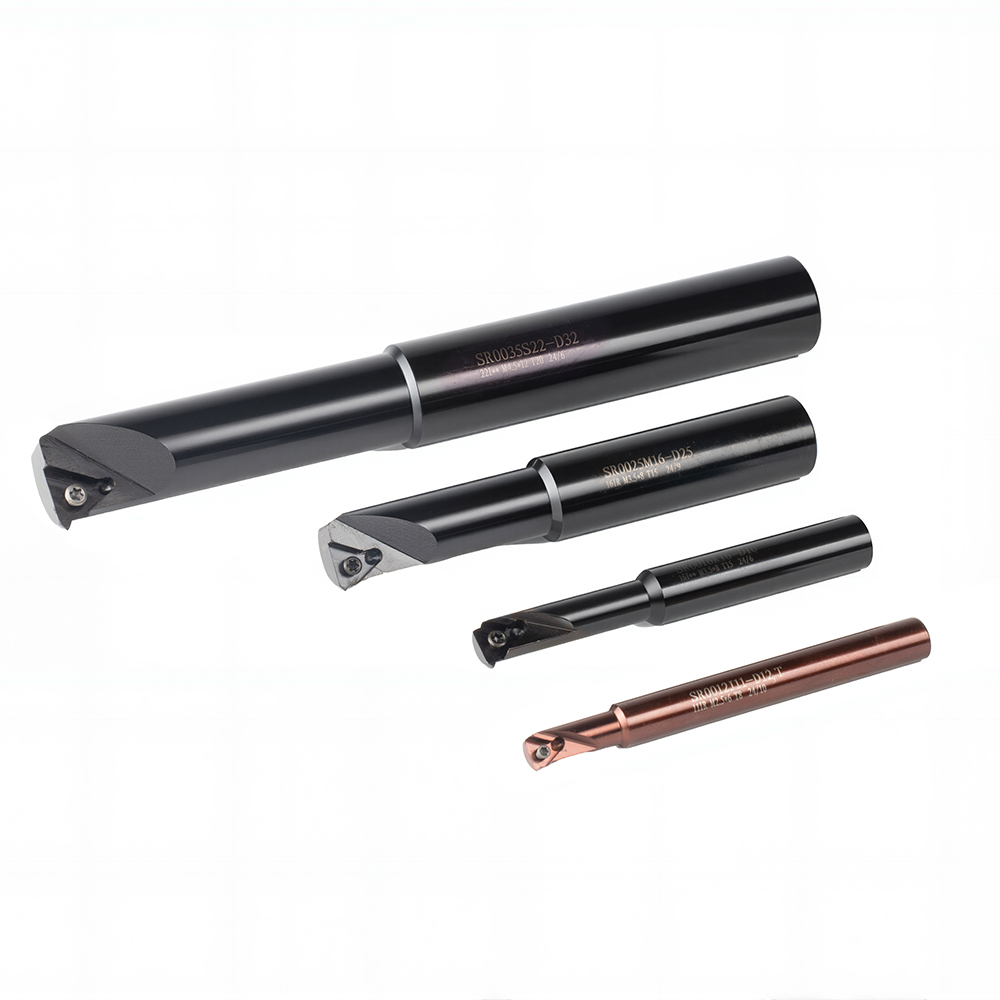
In the world of precision threading operations, deep-hole thread mills have established themselves as superior solutions for challenging applications where conventional shallow-cut tools fall short. These specialized cutters are engineered with unique geometries and structural enhancements that enable them to excel in deep threading tasks that would compromise standard tools. The fundamental differences go far beyond simple length variations, encompassing design philosophies that address the specific challenges of deep-hole machining.
The most apparent advantage lies in the tool’s extended reach capability, but the true engineering marvel is how deep-hole thread mills maintain rigidity throughout their length. Manufacturers achieve this through advanced substrate materials like micro-grain carbide and optimized core diameters that provide exceptional strength-to-length ratios. This structural integrity allows for successful threading in depth-to-diameter ratios exceeding 5:1, a feat impossible for standard thread mills. The specialized flute designs in deep-hole versions incorporate variable helix angles and customized relief geometries that prevent harmonic vibration, even when extended far beyond the tool holder.
Chip evacuation represents another area where deep-hole thread mills demonstrate clear superiority. Their enhanced flute volumes and optimized chip channels are specifically designed to manage the increased chip load generated in deep holes. This prevents chip packing that could lead to tool breakage or thread damage in conventional tools. Many deep-hole models incorporate internal coolant passages that direct high-pressure coolant precisely to the cutting edges, further ensuring clean chip removal from deep cavities. This feature proves invaluable when machining stringy materials like stainless steel or titanium that tend to form problematic chips in confined spaces.

The cutting geometry of deep-hole thread mills also differs significantly from their shallow-cut counterparts. These tools typically feature more conservative rake angles and reinforced cutting edges to withstand the increased torsional stresses encountered in deep applications. The edge preparations are often more robust, with specialized coatings like AlTiN or TiSiN that maintain lubricity and heat resistance throughout the extended cutting cycle. This combination allows deep-hole thread mills to maintain dimensional accuracy over the complete thread depth, avoiding the taper effect commonly seen when pushing standard tools beyond their design limits.
From a productivity standpoint, deep-hole thread mills offer substantial advantages in cycle time reduction. Their ability to complete deep threads in a single pass eliminates the need for multiple retractions required by shallow tools, potentially cutting threading time by 50% or more in certain applications. The reduced tool movements also minimize the risk of thread damage during retraction and re-entry, particularly important for precision threads with tight tolerances. Furthermore, the specialized designs typically allow for higher feed rates in deep-hole applications compared to conventional tools operating at their depth limits.

Tool life considerations further justify the use of dedicated deep-hole thread mills. By properly distributing cutting forces and heat generation along their specialized geometries, these tools demonstrate more consistent wear patterns compared to standard tools pushed beyond their intended depth capabilities. The result is predictable tool life and reduced frequency of tool changes, particularly valuable in production environments where downtime directly impacts profitability. Many users report 3-5 times longer tool life when using properly specified deep-hole thread mills compared to conventional tools in equivalent deep threading applications.
While deep-hole thread mills command a premium price, their total cost of ownership often proves lower than attempting to adapt standard tools for deep applications. The reduction in scrapped parts from broken tools or imperfect threads, combined with increased productivity and tool longevity, typically justifies the investment for any shop regularly performing deep threading operations. As thread depth increases beyond three times the diameter, the performance gap between dedicated deep-hole tools and conventional alternatives becomes increasingly pronounced, making the specialized tools the only viable option for consistent, high-quality results.
Have you encountered threading challenges that required switching to deep-hole thread mills?
Contact us:[email protected]