

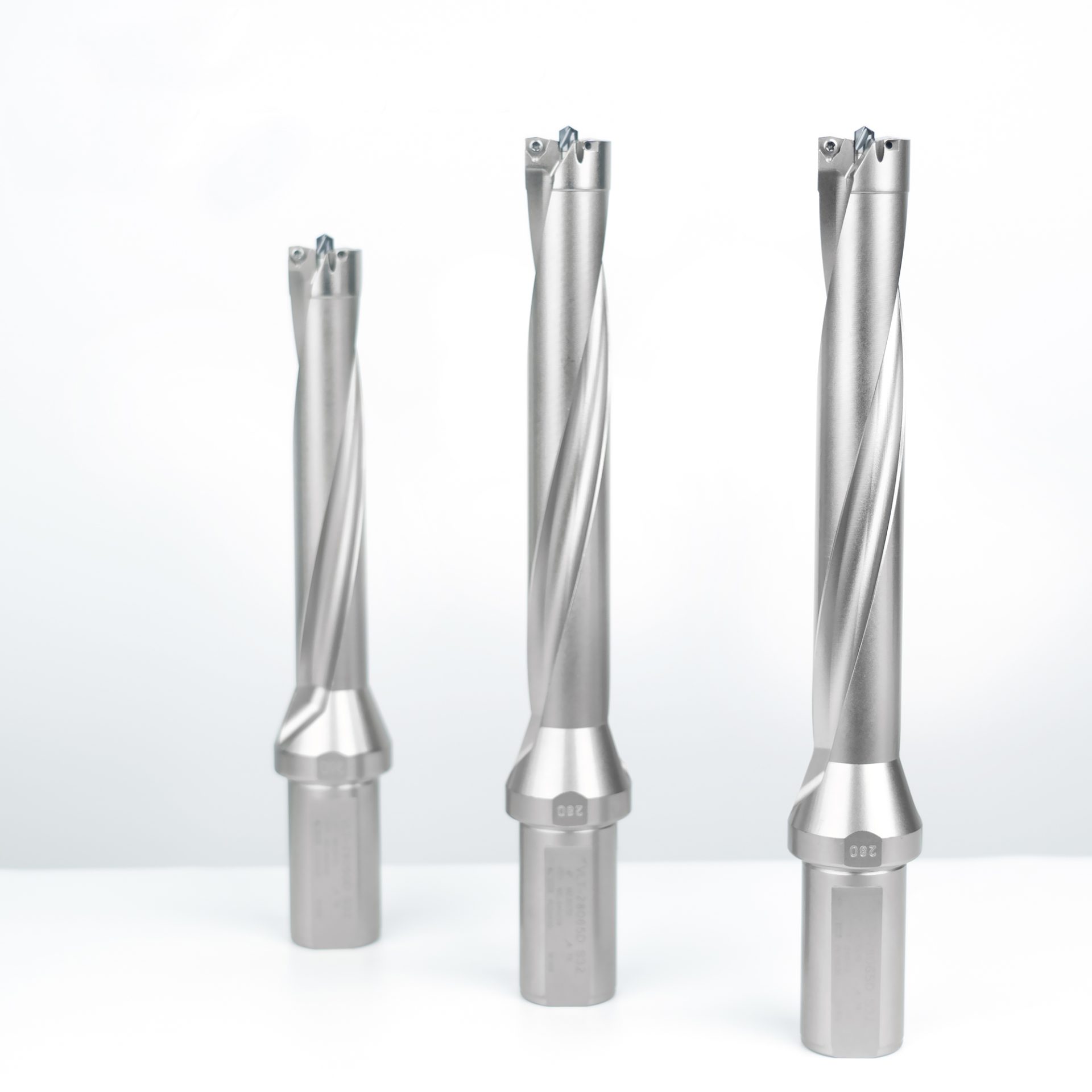
What Are Deep Hole Drills?
Deep hole drills are a category of drilling tools specifically designed to create holes with a depth-to-diameter ratio greater than 10:1. Unlike standard drill bits, deep hole drills feature unique geometries and coolant delivery systems that allow them to maintain accuracy and prevent overheating when drilling deep into a material. These drills are used in a variety of industries where high precision and deep penetration are required, such as in the manufacturing of engine blocks, gun barrels, and other components that demand exact specifications.
Types of Deep Hole Drilling Tools
There are several types of deep hole drilling tools, each designed to handle specific applications:
- Gun Drills: Gun drills are commonly used for creating long, straight holes with a smooth finish. They feature a single flute and internal coolant channels that deliver coolant directly to the cutting edge, keeping the tool cool and preventing chip buildup.
- BTA Drills (Boring and Trepanning Association Drills): BTA drills are used for larger diameter holes and feature an external coolant supply. This type of drill is known for its high drilling speed and efficiency, making it ideal for larger and more demanding drilling applications.
- Ejector Drills: Ejector drills, also known as double-tube drills, are used for medium to large-diameter holes. They utilize a dual-tube system that allows for efficient chip removal and coolant delivery, making them suitable for deep hole drilling in a variety of materials.
Advantages of Deep Hole Drills
Deep hole drills offer several advantages over standard drilling tools:
- Enhanced Precision: Deep hole drills are designed to maintain straightness and accuracy, even at significant depths. This precision is crucial in applications where tolerances are tight, such as in the aerospace and medical industries.
- Improved Chip Removal: The unique design of deep hole drills allows for efficient chip removal, which prevents clogging and reduces the risk of tool breakage. This is particularly important when drilling deep holes, where chips can quickly accumulate and cause problems.
- Reduced Heat Generation: Deep hole drills are equipped with internal or external coolant delivery systems that help dissipate heat generated during the drilling process. This reduces the risk of overheating and tool wear, extending the life of the drill and improving overall performance.
- High Speed and Efficiency: With their specialized designs, deep hole drills can operate at higher speeds than conventional drills, resulting in faster drilling times and improved productivity.
Key Considerations for Deep Hole Drilling
To achieve optimal results when using deep hole drills, it is essential to consider the following factors:
- Material Type: The material being drilled plays a significant role in the choice of deep hole drill and the drilling parameters. Harder materials, such as stainless steel or titanium, require specialized drills and slower speeds to prevent tool wear.
- Coolant Delivery: Proper coolant delivery is crucial to maintaining the tool’s temperature and preventing overheating. Selecting the correct type of coolant and ensuring it is delivered effectively to the cutting edge can significantly impact the quality and efficiency of the drilling process.
- Feed Rate and Speed: The feed rate and speed of the drill must be carefully controlled to prevent tool breakage and ensure a clean, precise hole. Too high a speed can lead to excessive heat generation, while too low a speed can result in poor chip removal and increased tool wear.
- Machine Stability: Deep hole drilling requires a stable and rigid machine setup to minimize vibrations and maintain accuracy. Any movement or instability in the machine can lead to deviations and negatively affect the quality of the drilled hole.
Common Applications of Deep Hole Drills
Deep hole drills are used in a wide range of industries and applications, including:
- Aerospace: For the manufacturing of structural components, engine parts, and hydraulic systems, where precision and reliability are paramount.
- Automotive: In the production of engine blocks, crankshafts, and other critical components that require deep, accurate holes.
- Oil and Gas: For drilling components used in exploration and production equipment, such as drill collars, downhole tools, and tubing.
- Medical: In the creation of implants, surgical instruments, and other devices that demand high precision and tight tolerances.
Conclusion
Deep hole drills are indispensable tools for handling the most challenging drilling applications. Their unique designs, advanced coolant delivery systems, and precision capabilities make them ideal for creating deep, accurate holes in a variety of materials. By understanding their advantages and key considerations, manufacturers can achieve superior results, enhance productivity, and maintain the high standards required in today’s competitive markets. If you’re looking to tackle complex drilling tasks, investing in quality deep hole drills is a decision that will pay off in precision and performance.